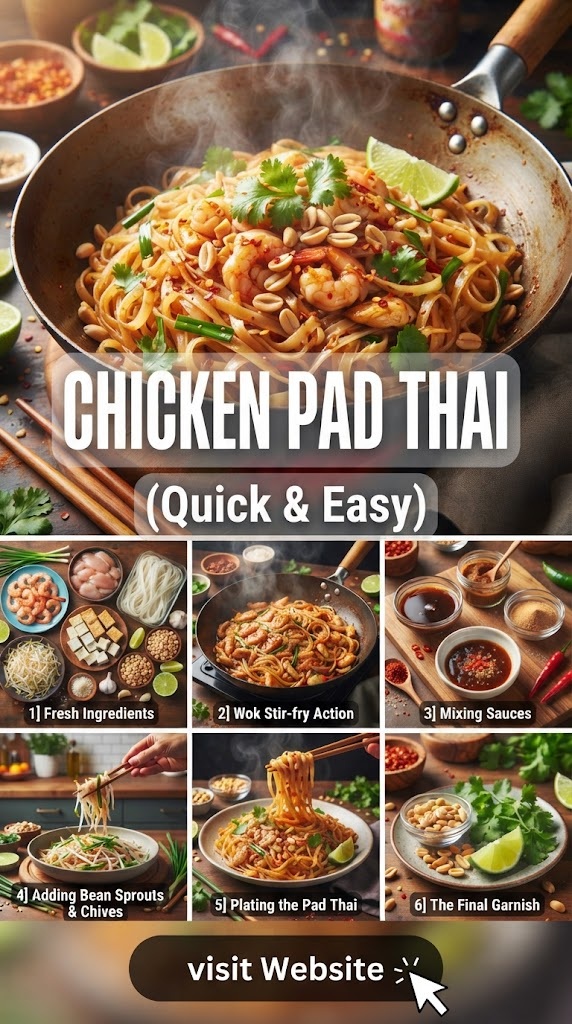
Chicken Pad Thai is one of those dinners that feels like takeout but is surprisingly easy to make at home. Tender pieces of chicken, chewy rice noodles, crunchy vegetables, scrambled egg, and a sweet-tangy Pad Thai sauce come together in one hot skillet. Finished with roasted peanuts, fresh lime, and cilantro, this recipe delivers big Thai-inspired flavor without requiring complicated cooking techniques.
This quick and easy Chicken Pad Thai is ideal for busy weeknights because most of the work happens before the pan gets hot. Once the ingredients are prepared, the dish cooks quickly. The key is to have everything measured, chopped, and ready before you begin.
Why You’ll Love This Chicken Pad Thai
There are plenty of reasons to make homemade Chicken Pad Thai.
First, it is fast. After soaking the noodles and preparing the ingredients, the actual cooking takes only about 15 minutes.
Second, it is customizable. You can make it sweeter, tangier, spicier, or more savory depending on your taste.
Third, it is a complete meal. You have protein from the chicken and egg, carbohydrates from the rice noodles, vegetables for freshness, and healthy fats from peanuts.
Most importantly, homemade Pad Thai tastes fresh. The noodles absorb the sauce while they cook, the chicken gets lightly browned, and the lime and herbs brighten everything at the end.
Complete Chicken Pad Thai Recipe
Recipe Information
Prep Time: 20 minutes
Cook Time: 15 minutes
Total Time: 35 minutes
Servings: 4
Cuisine: Thai-inspired
Course: Main Course
Difficulty: Easy
Ingredients
For the Chicken
- 1 pound boneless, skinless chicken breasts or thighs
- 1 tablespoon neutral cooking oil
- 1/2 teaspoon salt
- 1/4 teaspoon black pepper
- 1/2 teaspoon garlic powder
Cut the chicken into thin, bite-sized strips so it cooks quickly and evenly.
For the Noodles
- 8 ounces dried rice stick noodles
- Warm water, as needed for soaking
Choose medium-width rice noodles rather than extremely thin noodles. Medium noodles hold their texture well and absorb the sauce without becoming mushy.
For the Pad Thai Sauce
- 1/4 cup tamarind concentrate or tamarind paste
- 3 tablespoons fish sauce
- 2 tablespoons brown sugar
- 1 tablespoon soy sauce
- 1 tablespoon fresh lime juice
- 1–2 teaspoons chili garlic sauce or crushed red pepper, optional
- 2 tablespoons water
The sauce is the heart of the dish. It should have a balanced combination of sweet, salty, sour, and slightly spicy flavors.
For the Stir-Fry
- 2 large eggs
- 2 cloves garlic, finely minced
- 1 cup bean sprouts
- 1/2 cup thinly sliced carrots
- 3 green onions, sliced
- 1/4 cup chopped fresh cilantro
- 1/3 cup roasted peanuts, roughly chopped
- 2 tablespoons cooking oil, divided
- 1 lime, cut into wedges
Optional Additions
You can also add:
- Sliced red bell pepper
- Thinly sliced cabbage
- Snow peas
- Chopped Thai basil
- Extra bean sprouts
- Sliced cucumber
- Crushed red pepper
- Extra lime wedges
Ingredient Notes
Chicken
Chicken breast is lean and cooks quickly, but chicken thighs are especially flavorful and forgiving. If using breast meat, avoid overcooking because thin chicken pieces can become dry quickly.
Slice the chicken against the grain. This helps produce more tender bites.
Rice Noodles
Rice noodles are traditionally used for Pad Thai. Do not boil them until completely soft before stir-frying. Overcooked noodles can become sticky and break apart.
The goal is to soften them enough that they become flexible while remaining slightly firm in the center.
Tamarind
Tamarind gives Pad Thai its characteristic sour and fruity flavor.
Tamarind products vary considerably in strength, so taste the sauce before adding it to the noodles. If your tamarind concentrate is particularly sour, you may need slightly more sugar.
Fish Sauce
Fish sauce provides the savory depth that makes Pad Thai taste authentic and complex. It has a strong smell straight from the bottle, but once combined with the other ingredients, it creates a balanced flavor.
If you cannot use fish sauce, additional soy sauce can be substituted, although the finished flavor will be different.
Brown Sugar
Brown sugar balances the acidity of tamarind and lime. You can adjust the amount depending on your preference.
Peanuts
Roasted peanuts add crunch and richness. Chop them fairly small, but leave some larger pieces for texture.
How to Make Chicken Pad Thai Step by Step
Step 1: Prepare the Rice Noodles
Place the dried rice noodles in a large bowl.
Cover them with warm water and allow them to soak according to the package directions, usually around 20–30 minutes.
Check the noodles periodically. They should become flexible but still slightly firm.
Do not soak them until they are completely soft and ready to eat.
Drain the noodles thoroughly.
If they seem sticky after draining, gently separate them with your fingers or toss them with a tiny amount of oil.
Set them aside.
Why This Step Matters
The noodles continue cooking in the skillet when the sauce is added. Starting with overly soft noodles can result in a mushy Pad Thai.
Step 2: Prepare the Chicken
Pat the chicken dry using paper towels.
Slice it into thin strips.
Place the chicken in a bowl and season with salt, black pepper, and garlic powder.
Toss everything together until the seasoning evenly coats the chicken.
Set aside while you prepare the sauce.
Step 3: Make the Pad Thai Sauce
In a small bowl, combine:
- Tamarind concentrate
- Fish sauce
- Brown sugar
- Soy sauce
- Lime juice
- Chili garlic sauce
- Water
Whisk until the sugar is mostly dissolved.
Taste the sauce.
It should taste slightly stronger than you want the final noodles to taste because the noodles will dilute the flavor.
How to Balance the Sauce
If the sauce tastes too sour, add a little more brown sugar.
If it tastes too sweet, add a small amount of lime juice or tamarind.
If it tastes too salty, add a tablespoon of water and a little extra lime juice.
If you want more heat, add chili garlic sauce or crushed red pepper.
The ideal Pad Thai sauce should have a noticeable sweet-sour balance with savory depth.
Step 4: Prepare the Vegetables
Before heating the skillet, prepare all the vegetables.
Mince the garlic.
Slice the carrots.
Slice the green onions.
Wash and drain the bean sprouts.
Chop the cilantro.
Chop the peanuts.
Cut the lime into wedges.
This preparation is important because Pad Thai cooks quickly. Once you start stir-frying, you will not have much time to stop and prepare another ingredient.
Step 5: Cook the Chicken
Place a large wok or wide skillet over medium-high to high heat.
Add 1 tablespoon of oil.
Once the oil is hot, add the seasoned chicken in a single layer.
Cook for approximately 3–5 minutes, stirring occasionally, until the chicken is browned and cooked through.
Do not overcrowd the pan. If necessary, cook the chicken in two batches.
Transfer the cooked chicken to a clean plate.
Why Cook the Chicken Separately?
Cooking the chicken first allows it to brown properly instead of steaming. It also prevents the noodles from becoming overloaded while the chicken cooks.
Step 6: Cook the Eggs
Add another small amount of oil to the same skillet if needed.
Crack the eggs directly into the pan.
Let them cook for several seconds before gently scrambling them.
Cook until the eggs are mostly set but still soft.
Do not overcook the eggs because they will continue cooking when everything is combined.
Push the eggs toward one side of the skillet.
Step 7: Sauté the Garlic and Vegetables
Add the minced garlic to the empty part of the skillet.
Stir-fry for about 20–30 seconds until fragrant.
Add the carrots and cook for approximately 1–2 minutes.
Then add the bean sprouts and green onions.
Stir everything together.
The vegetables should remain slightly crisp rather than becoming completely soft.
Step 8: Add the Rice Noodles
Add the drained rice noodles to the skillet.
Using tongs or two spatulas, gently toss the noodles with the chicken, vegetables, and egg.
Work quickly but carefully.
If the noodles are sticking together, gently separate them with the tongs.
Step 9: Add the Pad Thai Sauce
Pour the prepared sauce around the noodles.
Toss continuously so the sauce coats the noodles evenly.
Cook for approximately 2–3 minutes.
The noodles should absorb the sauce while remaining chewy.
If the noodles seem dry, add 1 tablespoon of water at a time.
Avoid adding too much liquid at once.
Step 10: Return the Chicken
Add the cooked chicken back into the skillet.
Toss everything together for another 1–2 minutes.
The chicken should be hot and evenly coated with the sauce.
Taste the noodles.
Adjust the seasoning if necessary.
Step 11: Finish the Pad Thai
Turn off the heat.
Add chopped cilantro and some of the roasted peanuts.
Give everything one final toss.
Transfer the Chicken Pad Thai to serving plates.
Top each serving with additional peanuts and fresh cilantro.
Serve immediately with lime wedges.
The Secret to Great Chicken Pad Thai
The biggest secret is preparation.
Pad Thai is not a recipe where you want to chop ingredients while cooking. The noodles and sauce need attention, and the skillet becomes very hot.
Have everything ready before turning on the stove.
Your workstation should contain:
- Prepared chicken
- Soaked and drained noodles
- Prepared sauce
- Beaten eggs
- Garlic
- Vegetables
- Peanuts
- Cilantro
- Lime wedges
- Cooking oil
Once everything is ready, the recipe becomes extremely easy.
How to Prevent Mushy Noodles
Mushy noodles are one of the most common Pad Thai problems.
The first mistake is over-soaking the noodles.
The second mistake is overcooking them in the skillet.
The third mistake is adding too much liquid.
For the best texture, soak the noodles only until they are flexible but still firm.
When they enter the hot skillet, they should still have some resistance.
The sauce will finish cooking them.
How to Get Restaurant-Style Flavor
A large skillet or wok is extremely helpful.
The pan should be hot enough to quickly cook the ingredients without creating excessive moisture.
Avoid overcrowding.
If you are doubling the recipe, consider cooking it in two batches rather than putting everything into one small pan.
High heat also helps create lightly browned edges and a more complex stir-fried flavor.
Variations
Spicy Chicken Pad Thai
Add 1–2 teaspoons of chili garlic sauce to the sauce.
For additional heat, sprinkle crushed red pepper over each serving.
You can also serve sliced fresh chilies on the side.
Peanut Chicken Pad Thai
Add an extra 1/4 cup chopped roasted peanuts.
For even more peanut flavor, whisk 1 tablespoon of creamy peanut butter into the sauce.
Vegetable Pad Thai
Replace the chicken with:
- Mushrooms
- Broccoli
- Bell peppers
- Snow peas
- Cabbage
- Extra bean sprouts
Shrimp Pad Thai
Replace the chicken with peeled and deveined shrimp.
Shrimp cooks much faster than chicken, so cook it only until pink and opaque.
Extra-Garlicky Pad Thai
Use 3–4 cloves of garlic instead of two.
Garlic lovers can also add thinly sliced green onions for additional flavor.
What to Serve With Chicken Pad Thai
Chicken Pad Thai is filling enough to serve as a complete meal, but several fresh side dishes work beautifully.
Thai Cucumber Salad
A crisp cucumber salad provides refreshing contrast to the warm noodles.
Fresh Spring Rolls
Vegetable spring rolls add another fresh and crunchy element.
Steamed Vegetables
Broccoli, snow peas, or carrots can be served on the side.
Fresh Fruit
Pineapple, mango, or watermelon makes a refreshing finish.
Lime Wedges
Always serve extra lime at the table. A squeeze of fresh lime can completely brighten the dish.
Storage Instructions
Allow leftover Pad Thai to cool before transferring it to an airtight container.
Refrigerate for up to 3–4 days.
For best texture, store the peanuts separately if possible. This keeps them crunchy.
How to Reheat Chicken Pad Thai
The best way to reheat Pad Thai is in a skillet.
Add the leftovers to a skillet over medium heat.
Add 1–2 tablespoons of water.
Toss gently until the noodles are heated through.
You can also add a small amount of oil if the noodles appear dry.
Avoid overheating because rice noodles can become soft and sticky.
A microwave also works. Heat in short intervals, stirring between each interval, and add a small splash of water if necessary.
Freezing Chicken Pad Thai
Pad Thai can technically be frozen, but the noodle texture may change after thawing.
If you plan to freeze leftovers, allow the food to cool completely and store it in an airtight freezer-safe container.
For best quality, use within about 1–2 months.
Thaw overnight in the refrigerator and reheat gently in a skillet.
Fresh Pad Thai will always have the best noodle texture.
Common Mistakes to Avoid
1. Overcooking the Noodles
This creates soft, broken noodles.
Solution: Soak until flexible but firm.
2. Using Too Much Sauce
Too much sauce can make the noodles wet and heavy.
Solution: Start with the recommended amount and adjust gradually.
3. Cooking on Low Heat
Low heat can cause the ingredients to steam instead of stir-fry.
Solution: Use medium-high to high heat.
4. Overcrowding the Pan
A crowded pan doesn’t brown the chicken or vegetables properly.
Solution: Cook in batches if necessary.
5. Adding Peanuts Too Early
Peanuts can lose their crunch.
Solution: Add most of them at the end.
6. Not Tasting the Sauce
Different tamarind pastes and fish sauces have different strengths.
Solution: Taste and balance before adding the sauce to the noodles.
Tips for Making the Recipe Faster
For an even quicker dinner, prepare several ingredients ahead of time.
Chicken can be sliced earlier in the day.
The sauce can be mixed several hours in advance and refrigerated.
Vegetables can be sliced and stored in airtight containers.
Peanuts can be chopped ahead of time.
When dinner time arrives, you only need to heat the pan and cook.
This makes Chicken Pad Thai an excellent weeknight meal.
Frequently Asked Questions
Can I use chicken thighs?
Absolutely. Chicken thighs are juicy and flavorful and work very well in Pad Thai.
Can I use chicken breast?
Yes. Chicken breast is an excellent choice. Slice it thinly and avoid overcooking.
Can I make Pad Thai without tamarind?
You can make a simplified version using lime juice and other acidic ingredients, but tamarind provides the distinctive sweet-sour flavor associated with traditional Pad Thai.
Can I make it less spicy?
Yes. Simply leave out the chili garlic sauce and crushed red pepper.
Can I make it gluten-free?
Rice noodles are naturally gluten-free, but check the labels on soy sauce, fish sauce, and other packaged ingredients. Use certified gluten-free products when necessary.
Why are my noodles sticky?
They may have been over-soaked, overcooked, or left sitting together after draining.
Keep the noodles slightly firm and add them to the hot skillet soon after draining.
Can I use pre-cooked chicken?
Yes. Shredded or sliced cooked chicken can be used. Add it later in the cooking process so it doesn’t dry out.
Can I add more vegetables?
Definitely. Bell peppers, cabbage, carrots, mushrooms, and snow peas all work well.
Nutrition Information
Approximate nutrition per serving will vary depending on the exact ingredients and portion sizes.
Calories: Approximately 600–650
Protein: Approximately 40 g
Carbohydrates: Approximately 65 g
Fat: Approximately 22 g
Fiber: Approximately 4–6 g
Sugar: Approximately 12–15 g
Sodium: Varies depending on fish sauce and soy sauce
For precise nutrition information, calculate the recipe using the specific brands and quantities used.
Complete Recipe Card
Chicken Pad Thai (Quick & Easy)
Servings: 4
Prep Time: 20 minutes
Cook Time: 15 minutes
Total Time: 35 minutes
Ingredients
Chicken
- 1 pound boneless, skinless chicken
- 1 tablespoon oil
- 1/2 teaspoon salt
- 1/4 teaspoon black pepper
- 1/2 teaspoon garlic powder
Noodles
- 8 ounces rice noodles
Sauce
- 1/4 cup tamarind concentrate
- 3 tablespoons fish sauce
- 2 tablespoons brown sugar
- 1 tablespoon soy sauce
- 1 tablespoon lime juice
- 1–2 teaspoons chili garlic sauce
- 2 tablespoons water
Stir-Fry
- 2 eggs
- 2 cloves garlic
- 1 cup bean sprouts
- 1/2 cup sliced carrots
- 3 green onions
- 1/4 cup cilantro
- 1/3 cup roasted peanuts
- 1 lime
- 1–2 tablespoons additional cooking oil
Instructions
- Soak the rice noodles in warm water until flexible but still slightly firm. Drain well.
- Slice the chicken into thin strips and season with salt, pepper, and garlic powder.
- Mix tamarind, fish sauce, brown sugar, soy sauce, lime juice, chili sauce, and water.
- Heat a large wok or skillet over medium-high to high heat.
- Add oil and cook the chicken for 3–5 minutes, until browned and cooked through. Remove from the pan.
- Add a little more oil and scramble the eggs until mostly set.
- Add garlic, carrots, bean sprouts, and green onions. Stir-fry briefly.
- Add the drained rice noodles.
- Pour in the Pad Thai sauce and toss continuously for 2–3 minutes.
- Return the cooked chicken to the skillet.
- Toss everything together until hot and evenly coated.
- Turn off the heat and add cilantro and some chopped peanuts.
- Serve immediately with additional peanuts and fresh lime wedges.
Final Tips for Perfect Chicken Pad Thai
The best Chicken Pad Thai comes down to balance and timing. Your noodles should be chewy rather than mushy. Your chicken should be tender and lightly browned. Your vegetables should retain some crunch. And your sauce should bring together sweet, sour, salty, savory, and spicy flavors without allowing one element to overpower the others.
Most importantly, prepare everything before you start cooking. Once the skillet becomes hot, the dish comes together quickly.
For a weeknight dinner that feels like restaurant takeout without requiring complicated techniques, this Chicken Pad Thai (Quick & Easy) is a dependable choice. Serve it hot with plenty of roasted peanuts, fresh cilantro, and lime wedges for a colorful, flavorful meal the whole family can enjoy.
