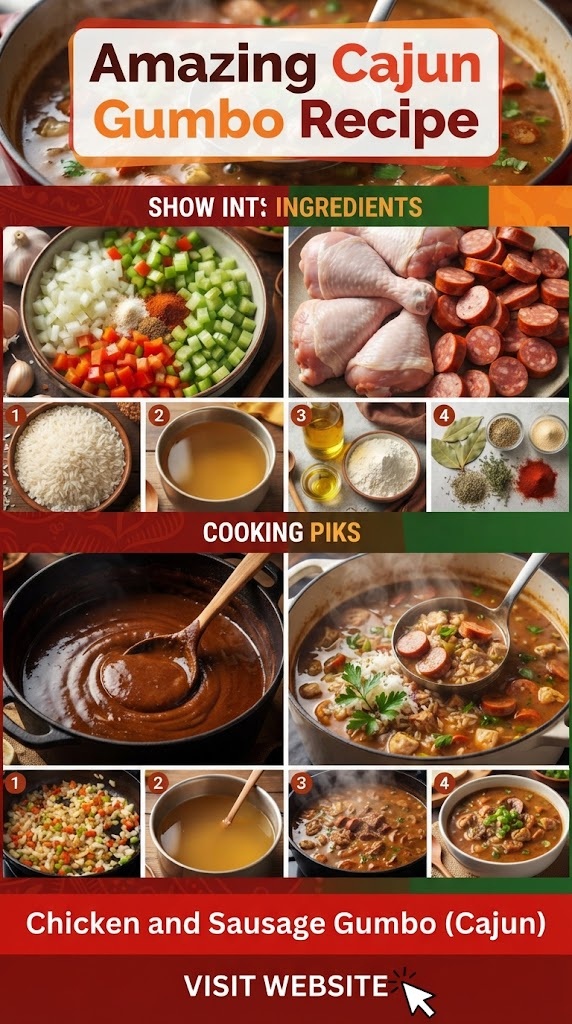
There is a specific kind of magic that happens in a heavy cast-iron pot when flour and oil meet heat. In the South, particularly in the Acadiana region of Louisiana, this isn’t just cooking—it’s an ancestral rite of passage. If you grew up in a house where the scent of browning flour signaled a gathering, you know that gumbo is more than a stew. It is a narrative of history, a blend of West African, French, and Native American influences simmered into a rich, dark gravy that coats the back of a spoon and warms the very soul.
Growing up, Sunday afternoons were marked by the rhythmic scrape-scrape-scrape of a wooden spoon against the bottom of a pot. My grandmother didn’t own a kitchen timer; she measured time by the color of her roux. “Wait until it’s the color of an old penny,” she’d say, then later, “now it’s the color of a Hershey bar.” This recipe is a tribute to that patience. We aren’t just throwing ingredients into a pot; we are building layers of flavor that can only be achieved through time, heat, and a little bit of Cajun intuition.
This is a Chicken and Sausage Gumbo that refuses to take shortcuts. We aren’t using store-bought roux jars or “quick” methods. We are going to do this the way it was intended—with a dark, smoky roux, the “Holy Trinity” of vegetables, and enough smoked andouille sausage to make your neighbors knock on your door asking what’s for dinner.
The Soul of the Dish: What Makes This Gumbo Special
What separates a mediocre gumbo from a legendary one? It isn’t the price of the ingredients; it’s the technique. Cajun gumbo, unlike its Creole cousin from New Orleans, typically eschews tomatoes. We rely on the Maillard reaction—the browning of sugars and proteins—to provide the depth of color and the earthy, nutty flavor profile that defines the dish.
In this recipe, we focus on the “Cajun Brown.” This isn’t a soup; it’s a thick, hearty, deeply seasoned masterpiece. The chicken is succulent and falling off the bone, the sausage provides a spicy, smoky snap, and the roux acts as the glue that binds the ocean of flavors together. We use the “Holy Trinity”—onions, bell peppers, and celery—which serves as the aromatic backbone. But we also pay attention to the “pope”—garlic—and the specific spices that give the Bayou its kick.
The Essential Ingredients for Success
Before you even turn on the stove, you need to gather your components. Gumbo is a fast-moving process once the roux is ready, so “mise en place” (having everything chopped and ready) is not just a suggestion; it’s a requirement.
1. The Fats and Flours
For the roux, you need equal parts fat and all-purpose flour. While some use butter, for a truly dark Cajun roux, you need an oil with a high smoke point. Vegetable oil, canola oil, or—if you want to be truly traditional—rendered lard or duck fat are the best choices.
2. The Meat
- Chicken: Always go for bone-in, skin-on thighs. They stay moist during the long simmer and the bones add incredible body to the stock.
- Sausage: Andouille is the gold standard. It’s a double-smoked pork sausage seasoned with garlic, pepper, and onions. If you can’t find authentic Louisiana andouille, a high-quality smoked kielbasa or spicy smoked sausage will suffice, though the flavor profile will shift slightly.
3. The Holy Trinity
In Cajun cooking, the Trinity consists of:
- Yellow Onions: For sweetness and body.
- Green Bell Peppers: For that sharp, vegetal bite.
- Celery: For earthy depth.
4. The Liquid Gold
Never use plain water. A high-quality chicken stock is essential. If you have the time, making a quick stock from the chicken trimmings and some vegetable scraps will elevate your gumbo to restaurant quality.
5. The Seasonings
You’ll need a solid Cajun seasoning blend (look for one where salt isn’t the first ingredient), dried thyme, bay leaves, and plenty of black and cayenne pepper. And of course, the optional but highly recommended Filé powder (ground sassafras leaves) to be added at the very end.
Mastering the Dark Roux: A Lesson in Patience
The roux is the most intimidating part of the process for many, but it shouldn’t be. Think of it as a moving meditation. You cannot rush it. If you try to make a dark roux in ten minutes on high heat, you will end up with “black specks”—burned flour that tastes bitter and ruined.
- The Beginning (Blonde): You start with flour and oil. It looks like wet sand.
- The Middle (Peanut Butter): After about 15-20 minutes of constant stirring over medium-low heat, the flour begins to toast. It smells like popcorn.
- The Goal (Dark Chocolate): You want to push it past the “copper” stage until it looks like melted dark chocolate. At this point, the roux is at its thinnest and most fragrant. This is the moment of truth. If you see black flakes, throw it out and start over. If it’s a deep, rich brown, you have succeeded.
Kitchen Equipment You’ll Need
To make a proper gumbo, your equipment matters. You need something that retains heat evenly and won’t scorched the flour.
- A Heavy Dutch Oven: Cast iron is the traditional choice. Enameled cast iron (like a Le Creuset) is fantastic because you can see the color of the roux more clearly against the light background.
- A Long-Handled Wooden Spoon: Metal spoons get too hot and can scrape the seasoning off your cast iron. A flat-edged wooden spoon is perfect for scraping the bottom of the pot to ensure no flour sticks.
- A Large Stockpot: If you are making your own broth.
- Sharp Chef’s Knife: For the mountain of chopping you’re about to do.
The Step-by-Step Gumbo Blueprint
Phase 1: The Meat Prep
Start by seasoning your chicken thighs generously with Cajun spices. In your Dutch oven, heat a tablespoon of oil and sear the chicken, skin-side down. We aren’t cooking it through yet; we are just developing a crust and rendering some of that delicious chicken fat into the pot. Once browned, remove the chicken and set it aside. In the same fat, brown your sliced sausage. Get those edges crispy. Remove the sausage and keep it with the chicken.
Phase 2: The Roux
Wipe out any burnt bits from the pot but keep the flavorful grease. Add your oil and flour. Now, start the stir. Keep the heat at medium-low. Use a steady, rhythmic motion. Do not stop. This will take anywhere from 30 to 45 minutes. Turn on some music or a podcast. This is the “soul” part of the recipe.
Phase 3: The Marriage of Trinity and Roux
Once your roux has reached that beautiful dark chocolate color, immediately dump in your chopped onions, bell peppers, and celery. The roux is incredibly hot—this is what we call “hissing the pot.” The moisture from the vegetables will stop the roux from cooking further (and prevent it from burning). The smell at this stage is arguably the best scent in the culinary world. Sauté the vegetables in the roux until they are soft and translucent, about 8-10 minutes. Add the garlic in the last minute so it doesn’t burn.
Phase 4: The Simmer
Slowly whisk in your chicken stock. Start with one cup at a time to ensure the roux incorporates smoothly without clumping. Once all the stock is in, add your browned chicken, sausage, bay leaves, and extra seasonings. Bring it to a boil, then immediately drop it to a very low simmer.
Phase 5: The Finishing Touches
Let the gumbo simmer, partially covered, for at least 1.5 to 2 hours. The chicken should be tender enough to pull apart with a fork. About 30 minutes before serving, I like to remove the chicken thighs, discard the skin and bones, shred the meat, and toss it back in. This ensures every spoonful has a bit of everything.
The Importance of the “Holy Trinity” and the “Pope”
In French cooking, a mirepoix is onions, carrots, and celery. But when the French arrived in the swampy lands of Louisiana, carrots didn’t grow well, but bell peppers flourished. Thus, the Holy Trinity was born.
- Onion (50%): Provides the sweetness that balances the bitterness of a dark roux.
- Bell Pepper (25%): Adds a bright, slightly spicy note without overwhelming heat.
- Celery (25%): Provides the structural “crunch” and an earthy, salty undertone.
- The Pope (Garlic): No Cajun dish is complete without a healthy amount of minced garlic added at the end of the vegetable sauté.
Using the correct ratios ensures that no single vegetable overpowers the delicate balance of the toasted flour.
Variations: Making It Your Own
While this is a classic Chicken and Sausage Gumbo, the beauty of the dish lies in its adaptability.
- The Seafood Twist: If you want to make it a “Surf and Turf,” you can add shrimp or lump crabmeat in the last 10 minutes of cooking. However, traditionally, Cajun gumbo is either meat-based or seafood-based, rarely both.
- The Okra Debate: Some people use okra as a thickener. If you like okra, sauté it separately until the “slime” (mucilage) is gone before adding it to the pot.
- Gumbo Z’Herbes: A Lenten tradition where the meat is replaced with a massive variety of greens (mustard, collard, turnip, spinach).
- The Wild Side: In rural Louisiana, it’s not uncommon to see duck, rabbit, or even wild boar in a gumbo pot.
Common Pitfalls to Avoid
Even seasoned cooks can stumble when making gumbo. Here is what to watch out for:
- The Burnt Roux: If you see black specks or it smells like a house fire, start over. A burnt roux will make the entire pot bitter, and no amount of salt or spice can fix it.
- Greasy Gumbo: If you don’t skim the fat off the top as it simmers, you’ll end up with a heavy layer of oil on your tongue. Use a wide spoon to skim the surface every 30 minutes.
- Cold Stock, Hot Roux: Always use room temperature or warm stock. Adding ice-cold liquid to a scorching hot roux can cause the flour to “seize” or create lumps.
- Over-salting Early: The gumbo will reduce as it simmers. If you salt it perfectly at the beginning, it might be a salt bomb by the time it’s finished. Season lightly at first and do your final adjustments at the end.
Pro Tips for the Ultimate Cajun Experience
- The “Beer” Measurement: Old-timers often measure a roux by how many beers it takes to finish. A “two-beer roux” is usually the perfect darkness.
- The Rice Matters: Serve your gumbo over long-grain white rice. The rice should be dry and fluffy, not mushy, so it can absorb the gravy without becoming a paste.
- Potato Salad? Yes!: In many parts of Acadiana, it is customary to serve a scoop of cold, creamy potato salad right in the middle of the gumbo bowl or on the side. The contrast of hot/cold and spicy/creamy is life-changing.
- The Resting Period: Like chili or lasagna, gumbo is almost always better the next day. The flavors settle and the roux develops a deeper complexity after a night in the fridge.
Storing, Freezing, and Reheating
In the Refrigerator
Gumbo stays fresh for 3-4 days in an airtight container. In fact, many Cajuns prefer “Day 2 Gumbo” because the spices have fully permeated the meat.
In the Freezer
Gumbo freezes beautifully because there is no dairy in it. Store it in freezer-safe bags or containers (leave an inch of headspace for expansion) for up to 3 months. To eat, thaw it overnight in the fridge.
Reheating
Reheat on the stovetop over medium-low heat. Avoid the microwave if possible, as it can make the chicken rubbery. If the gumbo has thickened too much in the fridge, add a splash of chicken broth or water to loosen it up.
Best Side Dishes to Serve with Gumbo
While gumbo is a meal in itself, these sides complete the Louisiana experience:
- Crusty French Bread: Essential for mopping up the last bits of roux from the bottom of the bowl.
- Maque Choux: A traditional Cajun corn side dish with peppers and onions.
- Fried Okra: If you didn’t put okra in the gumbo, serve it crispy on the side.
- Louisiana Hot Sauce: Always keep a bottle of Tabasco or Crystal on the table for those who want extra acidity and heat.
Frequently Asked Questions
What is Filé powder?
Filé powder is made from dried and ground sassafras leaves. It was introduced to the Acadians by the Choctaw Indians. It acts as both a thickener and an earthy seasoning. Crucial rule: Never boil filé powder. It will become stringy and tough. Add it to the individual bowls at the table or stir it into the pot after the heat has been turned off.
Can I make the roux in the oven?
Yes! If you are afraid of the stovetop method, you can whisk your flour and oil in a cast-iron skillet and put it in a 350°F oven. Whisk it every 15-20 minutes. It takes longer (about 90 minutes), but it is much harder to burn.
Why is my gumbo thin?
If your gumbo is too thin, it’s likely your roux-to-liquid ratio was off, or you didn’t simmer it long enough. You can fix this by simmering it uncovered to reduce the liquid, or by adding a “slurry” of cornstarch and water (though this is not traditional).
What is the difference between Cajun and Creole Gumbo?
The simplest answer: Tomatoes. Creole gumbo (from New Orleans) often uses tomatoes and more exotic spices. Cajun gumbo (from the prairies and swamps) is more rustic, darker, and almost never contains tomatoes.
Can I use a rotisserie chicken?
You can, but you’ll lose out on the deep flavor that comes from searing raw chicken and simmering the bones. If you do use rotisserie chicken, add it at the very end so it doesn’t disintegrate.
Final Thoughts: The Spirit of the Pot
Gumbo is not a dish you make when you are in a rush. It is a dish for a rainy Saturday, a family reunion, or a cold winter night when you need a hug from the inside out. It requires your presence—you have to stand over that pot, you have to watch the colors change, and you have to taste as you go.
When you finally sit down with a steaming bowl, the rice mounded in the center, the dark gravy shimmering with a few beads of oil, and the smell of smoked andouille filling the room, you aren’t just eating dinner. You are participating in a centuries-old tradition of making something magnificent out of simple, humble ingredients.
So, put on some Zydeco music, grab your wooden spoon, and start your roux. Your kitchen is about to become the best restaurant in town.
Laissez les bons temps rouler! (Let the good times roll!)
