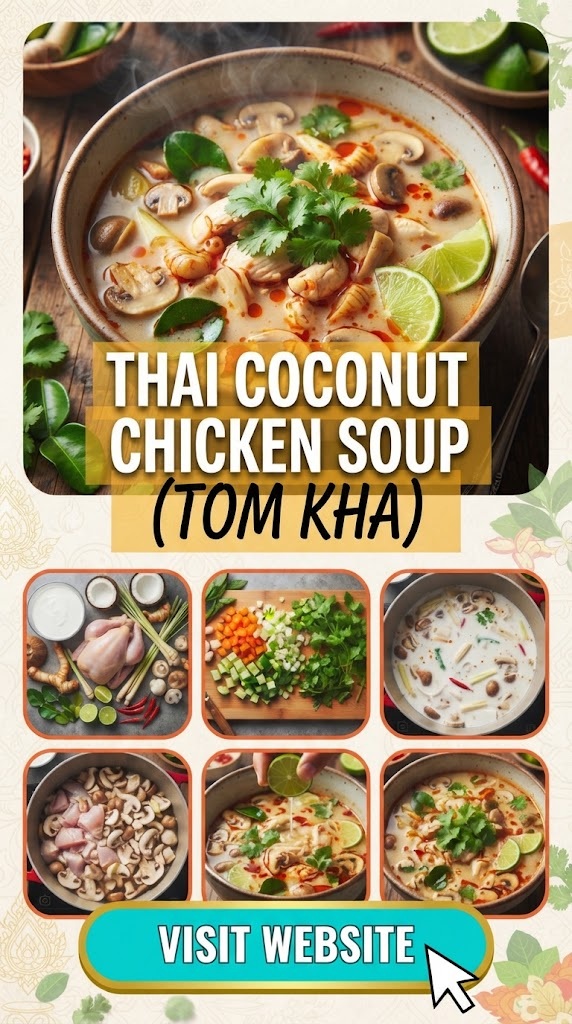
There is a specific, intoxicating moment in a Thai kitchen that defines the culinary landscape of Southeast Asia. It isn’t the searing heat of a wok or the pounding of a pestle; it is the gentle, rising steam from a pot of simmering coconut milk infused with stalks of lemongrass and discs of galangal. This is the birth of Tom Kha Gai, a dish that sits at the very pinnacle of Thai comfort food.
While Tom Yum often steals the spotlight with its fiery, clear-broth intensity, Tom Kha Gai offers a more sophisticated, velvet-textured embrace. It is a masterclass in the foundational Thai philosophy of flavor balance: the salty depth of fish sauce, the sharp citrus of lime, the creeping heat of bird’s eye chilies, and the mellow sweetness of coconut cream.
To the uninitiated, it may seem like a simple chicken soup. To the connoisseur, it is a complex infusion of ancient aromatics that requires patience, high-quality ingredients, and an understanding of how heat interacts with coconut fats. In this guide, we are stepping away from the “quick-fix” versions found in takeout containers and diving deep into the traditional methods that make this soup a world-class delicacy.
Decoding the Flavor Profile: The Five Pillars of Taste
Before we touch a single knife to a cutting board, we must understand the architecture of this soup. Thai cuisine is built on five pillars: Sweet, Sour, Salty, Spicy, and Umami. Tom Kha Gai is one of the few dishes that manages to hit all five with equal resonance.
- The Creamy Foundation (Sweet/Fat): The “Kha” in the name refers to galangal, but the “Tom” (boiled) and the unspoken “Kapi” or “Gati” (coconut) provide the body. High-fat coconut milk provides a rich mouthfeel that coats the palate, acting as a vehicle for the more aggressive spices.
- The Galangal Punch (Earthiness): Unlike ginger, which is spicy and hot, galangal is citrusy, piney, and almost medicinal in its freshness. It provides the “woody” backbone of the soup.
- The Lime Zest (Sour): Fresh lime juice added at the very end provides the brightness that cuts through the fat of the coconut milk.
- The Fish Sauce (Salty/Umami): This is the soul of the dish. It provides a fermented depth that salt alone cannot achieve.
- The Bird’s Eye Chili (Spicy): The heat in Tom Kha should be an afterthought—a lingering warmth rather than a frontal assault.
The Essential Ingredient Blueprint
The quality of your Tom Kha Gai is directly proportional to the quality of your aromatics. Because this is an infusion-based soup, you cannot hide behind sub-par ingredients.
The Protagonist: Galangal (Kha)
If you cannot find galangal, you are essentially making a different soup. Galangal looks like ginger’s paler, tougher cousin. It has a skin that is almost translucent and a flesh that is incredibly dense. When sliced, it releases an aroma reminiscent of a pine forest mixed with lemon zest. Do not peel it; simply scrub it clean and slice it into thin coins.
Lemongrass (Takhrai)
Use only the bottom third of the lemongrass stalk—the pale, bulbous part. Remove the tough outer leaves until you reach the tender, purple-hued core. To release the essential oils, you must bruise the stalks. A heavy kitchen mallet or the back of a chef’s knife works perfectly. Smash them until they are slightly splintered, then cut them into two-inch lengths.
Makrut Lime Leaves (Bai Magroot)
Often incorrectly called Kaffir lime leaves, these are the secret weapon of Thai soups. They have a double-leaf structure and an aroma that is impossible to replicate with lime zest. To use them, tear the leaves away from the central rib to release their oils. Do not chop them; they are meant to infuse, not be eaten.
The Coconut Milk
This is not the place for “lite” coconut milk. You want full-fat, unsweetened coconut milk. If you can find brands like Aroy-D or Chaokoh in BPA-free cartons, your soup will have a much smoother consistency than canned versions, which often contain stabilizers like guar gum that can affect the texture.
The Protein: Chicken
Traditionally, bone-in chicken offers the most flavor, but for a standard home-cooked Tom Kha Gai, boneless, skinless chicken thighs are the gold standard. They remain juicy and tender even after simmering, whereas breast meat can become chalky and stringy in the acidic broth.
Mushrooms
Straw mushrooms are the traditional choice, but they can be hard to find fresh in the U.S. Oyster mushrooms or shiitakes are excellent substitutes. They have a velvety texture that mimics the chicken and absorbs the broth beautifully.
The Professional Toolkit
While you don’t need a high-tech kitchen to master this soup, a few specific tools will make the process more authentic and efficient.
- A Heavy-Bottomed Stockpot: This ensures even heat distribution and prevents the coconut milk from scorching at the bottom.
- A Granite Mortar and Pestle: While not strictly necessary for the soup itself, it is the best way to bruise your lemongrass and crush your chilies to release their maximum flavor potential.
- A Very Sharp Mandoline or Chef’s Knife: Galangal is incredibly fibrous; a dull knife will struggle to produce the thin slices needed for a good infusion.
- Fine-Mesh Strainer: Some prefer to strain out the woody aromatics (lemongrass and galangal) before serving to make the soup easier to eat.
Step-by-Step Instructions: The Blueprint for Success
Phase 1: The Infusion (The Most Critical Step)
Many amateur cooks make the mistake of adding everything to the pot at once. This results in a muddy flavor profile. We must treat the broth like a tea.
- Combine Liquid and Aromatics: In your pot, combine 2 cups of high-quality chicken stock with 1.5 cups of full-fat coconut milk. Add your sliced galangal (about 10-12 coins), your bruised lemongrass stalks (3-4 stalks), and 5-6 torn Makrut lime leaves.
- The Gentle Simmer: Bring the mixture to a very gentle simmer over medium-low heat. Do not let it reach a rolling boil, or the coconut milk may separate and lose its creamy emulsion. Let this steep for at least 10 to 15 minutes. The house should begin to smell like a Thai spa.
Phase 2: The Protein and Texture
- Add the Chicken: Slice 1 pound of chicken thighs into bite-sized strips. Gently drop them into the simmering broth. The low temperature will poach the chicken, keeping it incredibly moist.
- Incorporate the Mushrooms: Add 8 ounces of cleaned, sliced mushrooms. If using oyster mushrooms, tear them by hand for a more rustic, organic feel.
- The Chili Element: Take 3 to 5 Thai bird’s eye chilies. If you want a milder soup, leave them whole but prick them with a knife. If you want more heat, smash them lightly in your mortar and pestle before adding them to the pot.
Phase 3: The Balancing Act
- Seasoning: Once the chicken is cooked through (usually about 5-7 minutes), it’s time to season. Add 2 tablespoons of high-quality fish sauce and 1 tablespoon of palm sugar (or brown sugar). Stir until the sugar is completely dissolved.
- The Flame-Off Rule: This is the most important rule in Thai soup making. Turn off the heat before adding the lime juice. Boiling lime juice turns it bitter and destroys its bright, floral notes.
- Finish with Citrus: Stir in 3 to 4 tablespoons of fresh-squeezed lime juice. Taste the broth. It should be creamy, tangy, and salty. If it’s too sour, add a pinch more sugar. If it’s too rich, add another squeeze of lime.
Chef’s Secrets for a Silky Broth
The “Scum” Management
As the chicken cooks in the coconut milk, it will release proteins that can form a gray foam on the surface. While harmless, it ruins the pristine white aesthetic of the soup. Use a fine spoon to skim this off periodically.
The Chili Oil Garnish
To get those beautiful red droplets floating on top of the white broth, you need Nam Prik Pao (Thai roasted chili jam). You can stir a teaspoon into the pot at the end or use it as a garnish. It adds a smoky, savory depth that takes the dish from “home-cooked” to “five-star restaurant.”
Consistency Control
If you prefer a thinner soup, increase the ratio of chicken stock. If you want a rich, meal-in-a-bowl consistency, use a higher ratio of coconut cream. Traditionally, Tom Kha Gai is served as part of a multi-course meal, so it is usually slightly lighter than American-style “chowders.”
Common Mistakes to Avoid
- Using Dried Herbs: Dried lemongrass and dried lime leaves have about 10% of the flavor of fresh ones. If you can’t find fresh, look in the freezer section of your local Asian market.
- Overcooking the Chicken: Because the pieces are small, they cook very fast. Once the chicken is opaque all the way through, move immediately to the final seasoning steps.
- Substitution of Ginger: As mentioned, ginger is not galangal. Ginger is spicy and pungent; galangal is floral and cooling. If you absolutely cannot find galangal, use ginger but add a tiny bit of lemon zest to try and mimic the citrus notes—but know that a Thai grandmother would notice the difference!
- Boiling the Coconut Milk: High heat causes the fat in the coconut milk to “crack” or separate. This results in an oily layer on top and a grainy texture. Keep it at a “smiling simmer”—where only a few bubbles break the surface.
Recipe Variations: Adapting to Your Table
While chicken is the classic choice, this coconut broth is an incredible canvas for other ingredients.
- Tom Kha Talay (Seafood): Replace the chicken with large shrimp, scallops, and squid. Add the seafood at the very last minute, as it only needs 2-3 minutes to cook.
- Tom Kha Het (Vegetarian): Omit the chicken and double the mushrooms. Use a variety like king oyster, enoki, and cremini. Substitute the fish sauce with a high-quality vegan “no-fish” sauce or a combination of light soy sauce and a pinch of extra salt.
- The Low-Carb Version: Tom Kha Gai is naturally relatively low in carbs, but you can ensure it’s keto-friendly by using a monk fruit sweetener instead of palm sugar and serving it over cauliflower rice instead of jasmine rice.
The Art of Serving
Presentation is paramount in Thai culture. A bowl of Tom Kha Gai should look as vibrant as it tastes.
- The Vessel: Serve in wide, shallow bowls to allow the aromatics to peak through the surface.
- The Garnish: A generous handful of fresh cilantro (coriander) leaves is mandatory. For an extra pop of color, add thinly sliced red chilies or a drizzle of chili oil.
- The Sidecar: Always serve Tom Kha Gai with a side of steaming jasmine rice. The rice acts as a sponge, soaking up the creamy broth and tempering the acidity of the lime.
- The “Warning”: If you are serving this to guests who are unfamiliar with Thai food, remind them that the lemongrass stalks, galangal slices, and lime leaves are for infusion only and are generally not eaten (as they are very tough).
Storage and Reheating Tips
Tom Kha Gai is one of those rare dishes that actually tastes better the next day as the aromatics continue to steep in the broth.
- Fridge: Store in an airtight container for up to 3 days.
- Reheating: Never use the microwave if you can avoid it. Reheat on the stovetop over low heat. If the soup has thickened too much in the fridge, add a splash of chicken stock or water to loosen it up.
- Freezing: You can freeze Tom Kha, but be warned that coconut milk can sometimes change texture upon thawing, becoming slightly grainy. If you do freeze it, whisk it vigorously while reheating to re-emulsify the fats.
Nutrition Information (Per Serving)
- Calories: 320 kcal
- Protein: 22g
- Total Fat: 24g (Saturated Fat: 18g)
- Carbohydrates: 8g
- Fiber: 1g
- Sugar: 4g
- Sodium: 850mg
Note: Nutritional values are estimates based on standard ingredients. Adjustments in coconut milk brands or protein types will change these numbers.
Frequently Asked Questions
1. Can I use coconut cream instead of coconut milk? Yes, but you will need to dilute it. Coconut cream is much thicker and has a higher fat content. Use a ratio of one part coconut cream to two parts chicken stock to achieve the right consistency.
2. Why is my soup turning brown? This usually happens for two reasons: you are using a very dark mushroom (like portobello) or your fish sauce is old and oxidized. To keep the soup a pristine white, use light-colored mushrooms and fresh, straw-colored fish sauce.
3. Is there a substitute for Makrut lime leaves? There is no perfect substitute. Lime zest provides the citrus, but not the floral aroma. If you are desperate, a mix of lime zest and a tiny drop of high-quality lemon myrtle oil can work, but it’s always better to order the leaves online; they dry and freeze exceptionally well.
4. How do I make the soup spicier without changing the flavor? Instead of adding more bird’s eye chilies (which can make the soup bitter if too many are used), add a teaspoon of Thai chili paste (Nam Prik Pao) or a few drops of pure capsaicin oil.
5. Can I use frozen galangal? Absolutely. Frozen galangal is actually preferred over no galangal at all. It retains about 90% of its flavor and texture. Just slice it while it’s still partially frozen for the best results.
6. What rice pairs best with this soup? Thai Jasmine rice is the only way to go. Its floral scent complements the lemongrass perfectly. Avoid basmati or short-grain white rice, as the textures don’t harmonize as well with the coconut broth.
7. My soup curdled! Can I fix it? Curdling usually happens if the heat was too high or the lime juice was added while the soup was boiling. You can try to fix it by running it through a blender (remove the aromatics first!), but the texture may never be perfectly smooth. The flavor will still be delicious, though!
Final Thoughts: A Journey in a Bowl
Mastering Tom Kha Gai is a rite of passage for any lover of Thai cuisine. It teaches you the importance of “layers”—how a soup can be built step-by-step to create a final product that is far greater than the sum of its parts.
When you take that first spoonful, you should experience a sequence of events: first, the cooling cream of the coconut; then, the bright, electric zing of the lime; followed by the savory umami of the fish sauce; and finally, a gentle, aromatic warmth from the galangal and chili. It is a dish that satisfies the soul as much as the appetite.
Whether you are cooking for a rainy Tuesday night or a sophisticated dinner party, this Thai Coconut Chicken Soup is a testament to the beauty of fresh ingredients and traditional techniques. Don’t be afraid to adjust the seasoning at the end—your palate is the ultimate judge. Happy cooking, and Sa-wat-dee!
