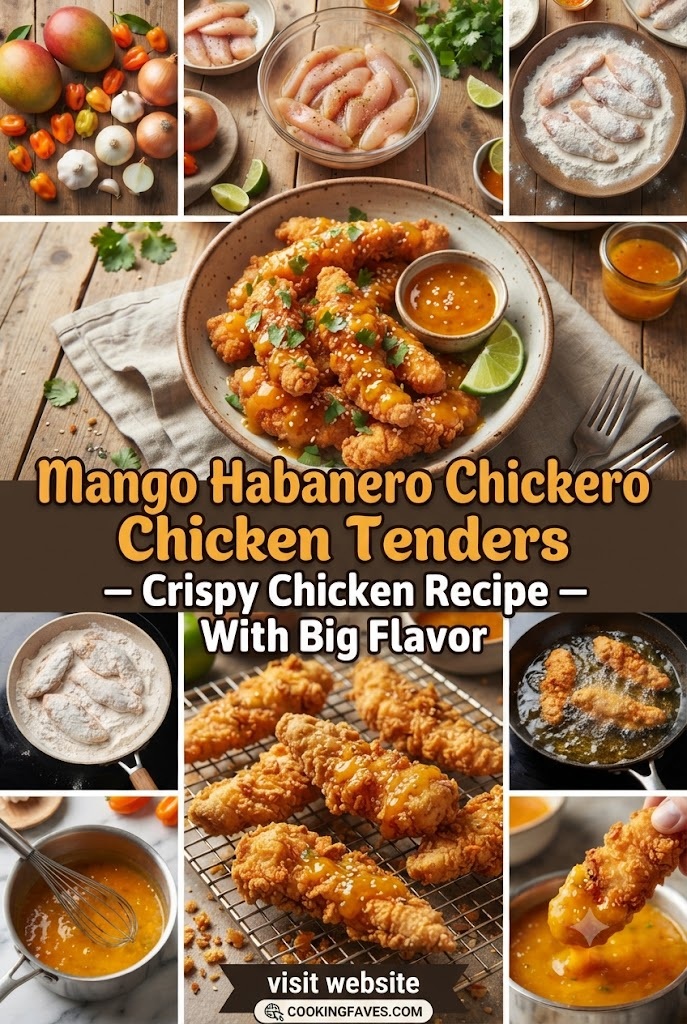
There is a specific kind of culinary magic that happens when the tropical, floral sweetness of a ripe mango meets the aggressive, creeping heat of a habanero pepper. It is a pairing that defies logic but delights the senses, creating a symphony of flavors that dance across the palate. When you take this iconic sauce and drape it over shatteringly crispy, golden-brown chicken tenders, you aren’t just making dinner; you’re creating a masterpiece of American comfort food with a Caribbean-fusion twist.
Mango Habanero Chicken Tenders have become a staple in sports bars and high-end gastropubs alike, but achieving that perfect balance of “big flavor” and “perfect crunch” at home requires more than just tossing some bottled sauce on fried chicken. It requires an understanding of breading techniques, temperature control, and the delicate art of sauce reduction.
In this comprehensive guide, we will dive deep into the world of the Mango Habanero Chicken Tender. We will explore the science of the crunch, the chemistry of the heat, and provide you with a foolproof roadmap to making the best chicken you have ever tasted.
The Flavor Profile: Why Mango and Habanero are Best Friends
To understand why this recipe works, we have to look at the flavor chemistry. The human tongue is wired to respond to contrast. Salt enhances savory notes, but the real “wow” factor comes from the interplay between sugar and spice (capsaicin).
The Role of the Mango
Mangoes provide a thick, viscous base for a sauce. They are high in natural sugars, which caramelize beautifully when cooked. More importantly, mangoes have a distinct acidity and a floral aroma that cuts through the richness of fried food. When pureed, they create a velvety texture that clings to the nooks and crannies of a breaded chicken tender without making it soggy immediately.
The Power of the Habanero
On the Scoville scale, the habanero sits comfortably between 100,000 and 350,000 SHU (Scoville Heat Units). It is significantly hotter than a jalapeño but lacks the “instant pain” profile of a Carolina Reaper. Habaneros are unique because they have a fruity, almost apricot-like undertone. This makes them the natural companion for tropical fruits. The heat of a habanero is a “creeper”—it starts slow and builds, a sensation that is perfectly mitigated by the cooling effect of the sugar in the mango.
The Anatomy of the Perfect Chicken Tender
A “big flavor” recipe is nothing if the texture is lacking. To create a restaurant-quality tender, we need to focus on three distinct layers: the meat, the binder, and the crust.
1. The Meat: Choosing the Right Cut
While you can slice chicken breasts into strips, the true “tenderloin” (the small strip of meat attached to the underside of the breast) is superior. It is more delicate and cooks faster. If you are using breasts, ensure you cut across the grain to keep the meat from becoming chewy.
2. The Brine: The Secret to Juiciness
If you want chicken that stays succulent even after deep frying, you must brine it. A buttermilk brine is the gold standard. The lactic acid in the buttermilk breaks down the proteins in the chicken, making it incredibly tender, while the salt seasons the meat all the way to the bone (or the center of the tender).
3. The Crust: The Science of the Crunch
For Mango Habanero tenders, we recommend a hybrid breading approach. Using a mix of all-purpose flour for coverage and Panko breadcrumbs for texture creates a “high-definition” crunch. The Panko creates a jagged surface area, which is essential for “catching” the mango habanero sauce.
Ingredients You Will Need
For the Chicken and Brine:
- 2 lbs Chicken Tenderloins
- 2 cups Buttermilk
- 1 tbsp Smoked Paprika
- 1 tsp Garlic Powder
- 1 tsp Onion Powder
- 1 tsp Salt and Black Pepper
- A dash of hot sauce (optional, for extra depth)
For the Breading:
- 2 cups All-Purpose Flour
- 1 cup Panko Breadcrumbs
- 1/2 cup Cornstarch (the secret to extra crispiness)
- 2 tsp Baking Powder (creates tiny air bubbles for lightness)
- Additional seasonings (Salt, Pepper, Cayenne)
For the Mango Habanero Sauce:
- 2 Ripe Mangoes (peeled and pitted)
- 2-4 Habanero Peppers (depending on your heat tolerance)
- 1/2 cup Apple Cider Vinegar
- 1/4 cup Honey or Agave Nectar
- 2 cloves Garlic, minced
- 1 tbsp Lime Juice
- A pinch of Salt
Step-by-Step Guide: Making the Mango Habanero Sauce
The sauce is the soul of this dish. Do not rush this process.
- Prepare the Peppers: If you want a milder sauce, remove the seeds and the white membranes (placenta) from the habaneros. This is where most of the capsaicin lives. If you want a fiery “big flavor” experience, leave them in. Pro tip: Wear gloves. Habanero oils stay on your skin for hours.
- Blend: Place the mango chunks, habaneros, garlic, vinegar, and honey into a blender. Process until completely smooth.
- Simmer: Pour the mixture into a saucepan over medium heat. Bring it to a gentle simmer. This step is crucial because it cooks out the raw “green” taste of the peppers and allows the sugars to concentrate.
- Reduce: Let the sauce reduce by about one-third. It should be thick enough to coat the back of a spoon. Finish with a squeeze of fresh lime juice to brighten the flavors. Set aside to cool slightly.
Mastering the Breading Station
To achieve that iconic “crispy chicken recipe” look, follow the Dry-Wet-Dry method.
- Initial Flour Dust: Dredge the brined chicken in seasoned flour. This dries the surface so the batter can stick.
- The Dip: Dip the chicken back into the buttermilk brine.
- The Final Coat: Press the chicken firmly into the Panko/Flour/Cornstarch mixture. Really push the breading into the meat to create those craggy bits that turn into “crunch gold” when fried.
Cooking Methods: Frying vs. Air Frying vs. Baking
While deep frying is the traditional way to get “Big Flavor” and maximum crunch, modern technology offers excellent alternatives.
Method 1: The Classic Deep Fry (The Gold Standard)
- Oil: Use a high smoke point oil like Peanut, Canola, or Vegetable oil.
- Temperature: Heat the oil to 350°F (175°C). Use a thermometer. If the oil is too cold, the chicken will be greasy; if it’s too hot, the outside will burn before the inside is cooked.
- Process: Fry in batches for 5-6 minutes until the internal temperature reaches 165°F.
- Rest: Drain on a wire rack, not paper towels. Air needs to circulate around the chicken to prevent steam from softening the crust.
Method 2: The Air Fryer (The Healthy Choice)
- Prep: Spray the air fryer basket liberally with oil.
- Cook: Place tenders in a single layer (no crowding!). Spray the tops of the chicken with oil.
- Settings: Air fry at 400°F for 12-15 minutes, flipping halfway through.
- Result: You get about 85-90% of the crunch of deep frying with significantly less fat.
Method 3: Oven Baking (The Bulk Method)
- Prep: Place a wire rack over a baking sheet. This allows the heat to hit the bottom of the tenders.
- Cook: Bake at 425°F for 18-20 minutes.
- Pro Tip: Toast your Panko in a skillet with a little oil before breading the chicken to give it a head start on color and crunch.
The Assembly: Tossing the Tenders
The moment of truth. To keep your Mango Habanero Chicken Tenders crispy, do not drench them in sauce and let them sit.
- Place the freshly cooked, hot tenders in a large stainless steel bowl.
- Drizzle the warm Mango Habanero sauce over the sides of the bowl.
- Using a gentle “toss and fold” motion, coat the chicken.
- Serve immediately.
Alternative: If you are serving a crowd and want to maintain maximum crunch for a longer period, serve the sauce on the side as a dipping sauce. This allows guests to control their own heat levels.
Expert Tips for the Ultimate “Big Flavor”
- Mango Selection: Use “Champagne” (Atulfo) mangoes if possible. They are less fibrous and have a creamier texture than the larger red-green Tommy Atkins variety found in most grocery stores.
- The Cornstarch Trick: Adding cornstarch to your flour mixture interferes with gluten development, which results in a crispier, more “shattery” crust rather than a bready one.
- Double Dredge: If you want a really thick, restaurant-style crust, repeat the buttermilk and Panko step twice.
- Temperature Control: Never fry chicken straight from the fridge. Let it sit at room temperature for 15-20 minutes so the oil temperature doesn’t drop too sharply when you add the meat.
Serving Suggestions and Pairings
To balance the “Big Flavor” of the Mango Habanero, you need sides that provide either a cooling effect or a salty crunch.
The Perfect Sides:
- Cilantro Lime Slaw: The acidity and crunch of raw cabbage with a lime-crema dressing is the perfect foil to the habanero heat.
- Sweet Potato Fries: The sweetness of the fries complements the mango, while the saltiness balances the spice.
- Cooling Dips: Traditional Blue Cheese or a high-quality Buttermilk Ranch dressing are essential. They contain casein, a protein in dairy that literally “washes” capsaicin off your pain receptors.
Drink Pairings:
- Craft Beer: A hoppy IPA can actually enhance the spice, while a crisp Mexican Lager or a Wheat Beer will help soothe the palate.
- Non-Alcoholic: A sparkling Pineapple Ginger ale or a classic Horchata (rice milk with cinnamon) works wonders for quenching the habanero fire.
Troubleshooting Common Issues
Why isn’t my chicken crispy?
- The oil wasn’t hot enough: If the oil is under 325°F, the breading absorbs oil rather than crisping up.
- Crowding the pan: Adding too much chicken at once drops the oil temperature.
- Steam: If you put hot chicken on a flat plate, the steam from the bottom will make it soggy. Always use a wire cooling rack.
The sauce is way too hot! What do I do?
- Add more mango puree or a tablespoon of honey.
- Add a splash of cream or butter to the sauce; the fats will help neutralize the capsaicin.
- Add a little more lime juice; sometimes the acid can help mask the intensity of the heat.
The breading is falling off the chicken.
- Make sure the chicken is patted dry before the first flour dredge.
- After breading, let the chicken sit on a rack for 5-10 minutes before frying. This allows the breading to “set” and hydrate, acting like a glue.
The History and Evolution of Fruit-Heat Fusion
The concept of mixing fruit with high-heat peppers isn’t a modern invention of American sports bars. It has deep roots in Caribbean and Southeast Asian cuisines.
In the Caribbean, particularly Jamaica and Trinidad, Scotch Bonnet peppers (a close relative of the habanero) have long been paired with mangoes, papayas, and pineapples in “jerk” seasonings and hot sauces. These cultures understood centuries ago that the tropical environment produced ingredients that naturally balanced each other.
In the 1990s and early 2000s, as the American palate began to crave more complex flavors beyond the traditional vinegar-and-cayenne “Buffalo” style, chefs began experimenting with global ingredients. The Mango Habanero profile exploded in popularity because it offered a “3D flavor” experience:
- Top Note: Tropical sweetness.
- Middle Note: Savory, salty chicken.
- Bottom Note: Long-lasting, glowing heat.
Today, this recipe represents the best of fusion cooking—taking a classic American form (the chicken tender) and elevating it with global flavors.
Storing and Reheating for Best Results
If you find yourself with leftovers (a rare occurrence!), follow these steps to ensure they don’t turn into a rubbery mess.
- Storage: Keep the chicken and sauce separate if possible. Store the chicken in an airtight container in the fridge for up to 3 days.
- Reheating: Never use the microwave. It will make the breading soggy and the chicken tough. Instead, use an oven or air fryer at 375°F for 5-8 minutes until the chicken is heated through and the crust has regained its “snap.”
- Sauce: Reheat the sauce in a small pan with a teaspoon of water to loosen it back up.
Customizing Your Recipe: Variations to Try
1. The “Keto” Mango Habanero Tender
Swap the flour/Panko for crushed pork rinds and almond flour. For the sauce, use a sugar-free apricot preserve and fresh habaneros to keep the carb count low while maintaining the fruity profile.
2. The Grilled Version
If you want to skip the breading entirely, marinate the tenders in a mixture of oil, lime, and garlic. Grill them over high heat until charred, then glaze them with the Mango Habanero sauce during the last 2 minutes of cooking.
3. The “Insanity” Level
For the true “chili-heads,” add a pinch of Ghost Pepper powder to the breading and use 6-8 habaneros in the sauce. This is only for those who truly love the burn!
4. The Sticky Coconut Version
Add shredded coconut to your Panko breading. The coconut flavor pairs beautifully with the mango and adds an extra layer of tropical complexity and crunch.
Why This Recipe Ranks as a Fan Favorite
When we talk about “Big Flavor,” we are talking about a dish that hits every part of the tongue. This Mango Habanero Chicken Tender recipe is designed for those who find standard fried chicken a bit too one-note. It’s a recipe for the adventurous, the home cook who wants to impress, and the family that wants a “restaurant night” at their own dining table.
By following the brining and breading techniques outlined here, you are ensuring that your chicken is the highest quality possible. By making your own sauce from fresh mangoes and habaneros, you are avoiding the corn-syrup-heavy, artificial tasting bottled versions.
The result is a dish that is bright, fiery, crispy, and utterly addictive. Whether it’s for a game day party, a weekend treat, or a way to spice up your meal prep, these tenders are guaranteed to become a household favorite.
Frequently Asked Questions (FAQ)
Can I use frozen mangoes?
Yes! Frozen mangoes are often picked at peak ripeness and frozen immediately. They work perfectly for the sauce. Just thaw them before blending.
Are habaneros hotter than jalapeños?
Much hotter. A jalapeño averages about 5,000 Scoville units, while a habanero starts at 100,000. Use them sparingly if you are sensitive to heat.
How do I make the chicken extra “nubbly” like the big chains?
When you are moving the chicken from the buttermilk to the flour, let a few drops of buttermilk fall into the flour bowl. Mix it with your fingers to create small “clumps” of dough. These clumps will stick to the chicken and fry into extra-large, extra-crunchy bits.
Is this recipe gluten-free?
Not as written, but you can easily make it so. Use a 1:1 gluten-free flour blend and gluten-free Panko (usually made from rice flour). The results are nearly identical.
How long does the homemade sauce last?
Because of the vinegar and sugar content, the sauce will stay fresh in the refrigerator for up to two weeks in a sealed jar.
Final Thoughts: The Joy of Homemade Big Flavor
Cooking at home allows you to control the quality of your ingredients and the intensity of your flavors. These Mango Habanero Chicken Tenders are a testament to how simple ingredients—flour, chicken, fruit, and peppers—can be transformed into something extraordinary with the right technique.
The next time you’re craving something spicy, don’t settle for the drive-thru. Get some fresh mangoes, brave the heat of the habanero, and fry up a batch of the crispiest, most flavorful tenders you’ve ever had. Your taste buds will thank you.
Ready to start? Put on your gloves, slice those mangoes, and get that oil shimmering. The ultimate sweet and spicy experience is just a few steps away!
