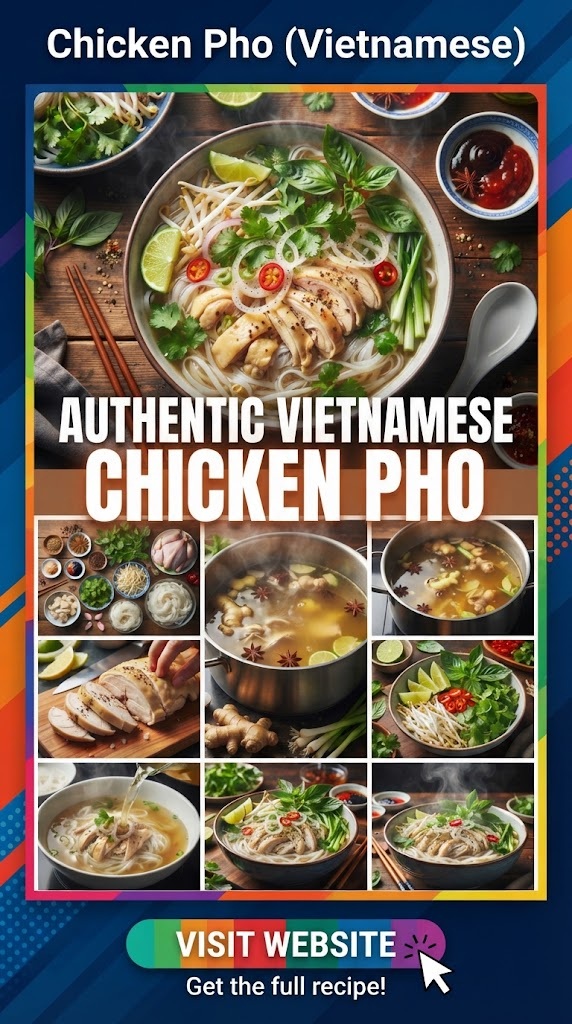
Chicken Pho (Vietnamese) — Fragrant, Comforting & Better Than Takeout
Chicken Pho, or Phở Gà, is one of Vietnam’s most beloved noodle soups. It combines a clear, aromatic chicken broth with silky rice noodles, tender shredded chicken, fresh herbs, crunchy vegetables, and bright toppings such as lime and chili. The beauty of a good chicken pho is its balance: the broth is savory but not heavy, fragrant but not overpowering, and every bowl can be customized at the table.
This homemade version is designed to give you a deeply flavored broth without requiring an entire day of cooking. The secret is gently simmering chicken with charred onion, ginger, cinnamon, star anise, coriander seeds, and fish sauce. These simple ingredients create the distinctive aroma associated with Vietnamese pho.
Whether you’re looking for a cozy weeknight dinner, a nourishing family meal, or an impressive weekend recipe, this Chicken Pho is an excellent choice.
What Is Chicken Pho?
Chicken Pho is a Vietnamese noodle soup traditionally made with chicken, rice noodles, and a fragrant broth. In Vietnamese, it is commonly called Phở Gà, with gà meaning chicken.
Unlike many Western-style chicken soups, pho gets much of its character from aromatic spices and charred ingredients. The broth is usually lighter and clearer than a creamy soup, while the combination of herbs, citrus, chilies, and sauces creates layers of flavor.
A bowl of chicken pho typically contains:
- Clear chicken broth
- Tender chicken
- Flat rice noodles
- Onion
- Fresh herbs
- Bean sprouts
- Lime
- Chili peppers
- Vietnamese sauces and seasonings
The result is a bowl that feels both comforting and refreshing.
Why You’ll Love This Chicken Pho Recipe
There are plenty of reasons to make homemade chicken pho.
1. Rich Flavor Without Heavy Ingredients
The broth gets its depth from chicken, aromatics, spices, and fish sauce rather than cream or large amounts of oil.
2. Fresh and Customizable
Everyone can build their bowl exactly the way they like it. Add extra herbs, lime, chili, bean sprouts, or sauces according to taste.
3. Perfect for Any Season
Although hot noodle soup is especially comforting during cooler weather, the fresh herbs and citrus make pho enjoyable throughout the year.
4. Great for Meal Prep
The broth can be prepared ahead of time and refrigerated or frozen. When you’re ready to eat, simply warm the broth and assemble fresh bowls.
5. Better Than Takeout
Homemade pho lets you control the salt, spice, noodle texture, and amount of chicken. You can also make the broth as aromatic as you like.
Chicken Pho Ingredients
For the Chicken Broth
Chicken
- 3 to 4 pounds bone-in, skin-on chicken thighs and/or breasts
- 10 cups water
Bone-in chicken gives the broth more flavor than boneless chicken. You can use a whole chicken if preferred.
Aromatics
- 1 large yellow onion, halved
- 4-inch piece fresh ginger, sliced lengthwise
- 4 cloves garlic, lightly crushed
The onion and ginger should ideally be charred before going into the broth. This adds a subtle smoky sweetness.
Whole Spices
- 2 cinnamon sticks
- 4 star anise
- 1 tablespoon coriander seeds
- 4 whole cloves
- 1 teaspoon fennel seeds, optional
Whole spices are important because they provide the characteristic fragrance of pho without making the broth cloudy or overly intense.
Seasonings
- 2 tablespoons fish sauce, plus more to taste
- 1 tablespoon sugar
- 1 to 1½ teaspoons salt, or to taste
Fish sauce provides savory depth, while sugar balances the salty and aromatic flavors.
For the Noodles
- 12 ounces dried flat rice noodles
- Plenty of water for cooking
Choose medium-width pho noodles if available. Flat rice noodles are ideal because they absorb the fragrant broth while remaining delicate.
For Serving
Prepare a generous selection of toppings:
- 1 small white or yellow onion, very thinly sliced
- 2 green onions, thinly sliced
- Fresh cilantro
- Fresh Thai basil
- Fresh mint
- Bean sprouts
- 1 to 2 limes, cut into wedges
- Fresh jalapeño or Thai chilies, thinly sliced
- Hoisin sauce
- Sriracha or another chili sauce
You don’t need every topping. Use whatever is available.
Ingredient Notes and Substitutions
Chicken
Bone-in chicken thighs are especially good because they stay juicy and provide flavorful broth. Chicken breasts can also be used, but be careful not to overcook them.
For an especially rich broth, use a combination of chicken thighs, breasts, wings, and a few chicken backs if available.
Ginger
Fresh ginger is strongly recommended. Ground ginger does not provide the same clean, aromatic flavor.
Onion
Yellow, white, or sweet onion works well. Charring the onion is more important than the exact variety.
Fish Sauce
Fish sauce is one of the defining ingredients in Vietnamese cooking. It gives the broth its characteristic savory flavor.
If you absolutely cannot use fish sauce, you can substitute a little soy sauce, but the final flavor will be different.
Sugar
A small amount of sugar doesn’t make the soup sweet. Instead, it balances the savory, salty, and spicy flavors.
Rice Noodles
Use rice noodles specifically intended for pho when possible. Different brands cook at different speeds, so follow the package directions carefully.
How to Make Chicken Pho Step by Step
Step 1: Char the Onion and Ginger
Start by preparing the onion and ginger.
Cut the onion in half, leaving the skin on if it is clean. Cut the ginger lengthwise into large pieces.
Place them cut-side down in a dry skillet over medium-high heat.
Cook until the surfaces become deeply browned and slightly blackened in spots.
You can also char them under a broiler or directly over a gas flame using appropriate heat-safe utensils.
The goal isn’t to burn the ingredients completely. You want dark, toasted surfaces that develop a smoky aroma.
Once charred, rinse off any loose blackened pieces and set the onion and ginger aside.
Why Char the Aromatics?
This step makes a significant difference.
Raw onion and ginger taste sharp and fresh. Charred onion and ginger develop deeper, sweeter, smokier flavors that become part of the broth.
Step 2: Toast the Spices
Place the cinnamon sticks, star anise, coriander seeds, cloves, and optional fennel seeds in a dry pot or skillet.
Toast over medium heat for about 1 to 2 minutes.
Stir or shake the pan frequently.
You should smell the spices becoming intensely fragrant.
Do not let them burn.
Once toasted, remove them from the heat.
Why Toast the Spices?
Toasting releases essential oils from the whole spices. This creates a more aromatic broth and gives the finished pho its distinctive fragrance.
Step 3: Prepare the Chicken
Place the chicken in a large stockpot.
Add the charred onion, ginger, and toasted spices.
Pour in approximately 10 cups of water.
The chicken should be mostly submerged.
Bring the mixture slowly toward a boil over medium-high heat.
As foam begins to rise to the surface, skim it away with a spoon.
Step 4: Simmer the Broth Gently
Once the water begins boiling, reduce the heat immediately.
The broth should simmer gently rather than boil aggressively.
A strong rolling boil can make the broth cloudy and may cause the chicken to become tougher.
Partially cover the pot and simmer for approximately 45 to 60 minutes, depending on the size of the chicken pieces.
If using a whole chicken, it may take longer.
Step 5: Remove the Chicken
Check the chicken for doneness.
Chicken should reach a safe internal temperature of 165°F (74°C) in the thickest portion.
Remove the cooked chicken from the broth and place it on a plate or cutting board.
Allow it to cool enough to handle.
Remove the meat from the bones and shred or slice it into bite-sized pieces.
Discard the bones and skin if desired.
Important Tip
Don’t leave chicken breast sitting in extremely hot broth for too long after it is cooked. Removing it helps prevent dry meat.
Step 6: Strain the Broth
Pour the broth through a fine-mesh strainer into another large pot or heat-safe container.
Discard the onion, ginger, and spices.
For an especially clear broth, strain it a second time through a clean fine-mesh strainer.
Return the clear broth to the pot.
Step 7: Season the Broth
Add:
- Fish sauce
- Sugar
- Salt
Taste carefully.
The broth should taste flavorful on its own, but remember that the noodles will slightly dilute the flavor.
If it tastes flat, add a little more fish sauce or salt.
If it tastes too salty, add a little water.
If the flavor is harsh, a small amount of sugar can help balance it.
If you want more aromatic flavor, you can return a small amount of toasted spice to the broth for several additional minutes, then remove it.
Step 8: Prepare the Rice Noodles
Cook the rice noodles according to the package instructions.
Many dried pho noodles require soaking or a short boiling time.
Don’t overcook them.
Rice noodles continue softening when hot broth is poured over them, so they should be slightly firm when you assemble the bowls.
Drain thoroughly.
If the noodles are becoming sticky, briefly rinse them with warm water and drain again.
Step 9: Prepare the Fresh Toppings
While the broth is simmering, prepare your toppings.
Thinly slice:
- Onion
- Green onions
- Jalapeños or Thai chilies
Wash and dry:
- Cilantro
- Thai basil
- Mint
- Bean sprouts
Cut the limes into wedges.
Arrange everything on a large serving platter.
This lets everyone customize their own bowl.
Step 10: Assemble the Chicken Pho
Place a serving of cooked rice noodles into a large soup bowl.
Top with sliced or shredded chicken.
Add some thinly sliced onion and green onions.
Ladle very hot broth over everything.
The hot broth warms the noodles and lightly softens the raw onion.
Finish with:
- Cilantro
- Thai basil
- Mint
- Bean sprouts
- Lime juice
- Fresh chili
Serve immediately.
How to Serve Chicken Pho
Pho is best served immediately after assembly.
Place the bowl on the table with the toppings alongside it.
A traditional-style serving experience is highly customizable. Start with a relatively simple bowl and allow each person to add toppings according to their preference.
For example, you might add:
- A squeeze of lime
- A handful of bean sprouts
- Fresh herbs
- A few slices of chili
- A little Sriracha
- A small amount of hoisin sauce
Be careful with sauces. Adding too much can overwhelm the delicate broth.
The Best Way to Get Clear Pho Broth
Clear broth is one of the visual hallmarks of a good pho.
Here are several techniques that help.
Don’t Boil Aggressively
Keep the broth at a gentle simmer.
Skim Regularly
Remove foam and impurities from the surface during the first part of cooking.
Strain Carefully
A fine-mesh strainer removes small particles.
Avoid Stirring Too Much
Excessive agitation can cause impurities to circulate throughout the broth.
Don’t Add Too Many Spices
Pho should smell aromatic, but the broth shouldn’t taste like a spice cabinet.
How to Make the Broth More Flavorful
If your broth tastes weak, don’t immediately add lots of salt.
First consider whether it needs more concentration.
You can simmer it uncovered for a little longer to reduce the liquid.
Then adjust with fish sauce and salt.
A small amount of sugar can also improve balance.
Another useful trick is to taste the broth hot, because temperature affects how you perceive salt and flavor.
Common Chicken Pho Mistakes
Mistake 1: Boiling the Broth Too Hard
A violent boil can make the broth cloudy and may toughen the chicken.
Solution: Maintain a gentle simmer.
Mistake 2: Using Too Much Star Anise
Star anise is powerful.
Too much can make the broth taste medicinal or overly licorice-like.
Solution: Start with a modest amount.
Mistake 3: Overcooking the Noodles
Soft, mushy noodles can ruin an otherwise excellent bowl.
Solution: Cook noodles until just tender.
Mistake 4: Over-Salting Early
The broth reduces slightly during cooking, and fish sauce is salty.
Solution: Season gradually and taste repeatedly.
Mistake 5: Skipping the Char
You can technically make pho without charring the onion and ginger, but the broth will lack some of its signature depth.
Solution: Take the extra few minutes to char them.
Can You Make Chicken Pho Ahead of Time?
Absolutely.
In fact, preparing the broth ahead can make serving pho much easier.
Prepare the broth and chicken as directed.
Cool the broth promptly and refrigerate it in an airtight container.
Store the chicken separately.
When ready to serve, reheat the broth until steaming hot.
Prepare fresh noodles and toppings just before serving.
This gives you a quick dinner without having to make the broth from scratch every time.
How to Store Chicken Pho
Store the components separately whenever possible.
Broth
Refrigerate in an airtight container for approximately 3 to 4 days.
Cooked Chicken
Store separately in the refrigerator for approximately 3 to 4 days.
Cooked Noodles
Rice noodles are best freshly prepared, but leftovers can be refrigerated for a short period in an airtight container.
Fresh Herbs and Vegetables
Store separately and keep them dry.
Don’t store the entire assembled bowl because the noodles will absorb the broth and become soft.
Can You Freeze Chicken Pho?
Yes.
The broth freezes very well.
Allow it to cool safely before transferring it to freezer-safe containers.
Leave some room at the top because liquid expands as it freezes.
The chicken can also be frozen separately.
For best results, make fresh rice noodles and fresh toppings when serving.
Frozen broth can generally be stored for several months for best quality.
Chicken Pho Meal Prep
Chicken pho can be adapted into a convenient meal-prep dinner.
Prepare a large batch of broth on the weekend.
Divide the shredded chicken into containers.
Keep broth separate.
Store herbs and vegetables separately.
When you’re ready to eat, heat the broth and cook fresh noodles.
Assemble everything immediately before eating.
This approach gives you a restaurant-style bowl with very little effort during the week.
How to Customize Chicken Pho
Make It Spicier
Add:
- Thai chilies
- Jalapeños
- Sriracha
- Chili oil
Make It More Citrusy
Add extra fresh lime juice just before serving.
Add More Herbs
Use generous amounts of:
- Thai basil
- Cilantro
- Mint
Add Vegetables
You can add:
- Bean sprouts
- Thinly sliced mushrooms
- Bok choy
- Baby spinach
- Snow peas
These aren’t necessarily traditional pho ingredients, but they can make the meal more substantial.
What to Serve With Chicken Pho
Chicken pho is already a complete meal, but a few small sides can complement it.
Consider serving:
- Fresh spring rolls
- Vietnamese-style cucumber salad
- Pickled vegetables
- Steamed vegetables
- Fresh fruit
- Small vegetable rolls
Because pho is flavorful and aromatic, simple sides usually work best.
Tips for Restaurant-Quality Chicken Pho
Use Bone-In Chicken
Bones add body and flavor to the broth.
Char the Aromatics
Don’t skip this step.
Toast the Spices
A short toast releases their aroma.
Use Fresh Herbs
Fresh herbs make a huge difference.
Keep the Broth Clear
Gentle cooking and careful straining are key.
Cook Noodles Separately
This prevents the noodles from making the broth cloudy or absorbing too much liquid.
Serve Immediately
Freshly assembled pho has the best texture.
Taste Before Serving
The final seasoning is important. Adjust salt, fish sauce, sugar, and lime according to taste.
Frequently Asked Questions
Is Chicken Pho Healthy?
Chicken pho can be part of a balanced meal. It contains protein from chicken, carbohydrates from rice noodles, and fresh herbs and vegetables.
The amount of sodium can vary significantly depending on how much fish sauce and salt are used, so adjust seasoning according to your dietary needs.
Can I Use Boneless Chicken?
Yes. Boneless chicken thighs are particularly convenient. However, bone-in chicken generally produces a more flavorful broth.
Can I Use Rotisserie Chicken?
Yes, if you need a shortcut.
You can make a quick aromatic broth separately and add shredded rotisserie chicken when assembling the bowls. The flavor won’t be identical to broth made from simmering chicken bones, but it’s a convenient option.
Can I Use Chicken Stock Instead of Water?
Yes. Unsalted or low-sodium chicken stock can add additional flavor.
If using commercial stock, reduce the amount of salt and fish sauce until you’ve tasted the finished broth.
Can I Make Pho Without Fish Sauce?
You can, although the flavor will change.
Try a combination of soy sauce and a small amount of salt, but don’t expect exactly the same traditional flavor.
Why Does My Pho Taste Bitter?
The most common causes are over-toasted spices, burned onion or ginger, or using too many spices.
Toast ingredients until fragrant and browned, not heavily burned.
Why Is My Broth Cloudy?
Aggressive boiling is a common reason.
Try maintaining a gentle simmer and skimming the broth regularly.
Straining the broth carefully can also improve clarity.
Easy Chicken Pho Recipe Card
Chicken Pho (Vietnamese)
Prep Time: 25 minutes
Cook Time: 1 hour
Total Time: About 1 hour 25 minutes
Servings: 6
Cuisine: Vietnamese
Course: Main Course, Soup
Difficulty: Moderate
Ingredients
Broth:
- 3–4 pounds bone-in chicken
- 10 cups water
- 1 large onion, halved
- 4-inch piece ginger
- 4 garlic cloves
- 2 cinnamon sticks
- 4 star anise
- 1 tablespoon coriander seeds
- 4 cloves
- 1 teaspoon fennel seeds, optional
- 2 tablespoons fish sauce
- 1 tablespoon sugar
- 1–1½ teaspoons salt
Noodles:
- 12 ounces flat rice noodles
Toppings:
- Sliced onion
- Green onions
- Cilantro
- Thai basil
- Mint
- Bean sprouts
- Lime wedges
- Jalapeños or Thai chilies
- Hoisin sauce
- Sriracha
Cooking Instructions
1. Char the Aromatics
Char the halved onion and ginger in a dry skillet until browned and slightly blackened.
2. Toast the Spices
Toast cinnamon, star anise, coriander, cloves, and fennel for 1–2 minutes until fragrant.
3. Start the Broth
Place chicken, charred aromatics, toasted spices, and water in a large pot.
4. Skim
Bring toward a boil and remove foam from the surface.
5. Simmer
Reduce heat and gently simmer for about 45–60 minutes, or until the chicken reaches 165°F (74°C).
6. Remove Chicken
Take the chicken out, cool slightly, and shred or slice the meat.
7. Strain
Strain the broth through a fine-mesh strainer.
8. Season
Add fish sauce, sugar, and salt. Taste and adjust.
9. Cook Noodles
Prepare rice noodles according to package directions. Drain well.
10. Assemble
Add noodles and chicken to bowls. Pour steaming-hot broth over them.
11. Garnish
Add herbs, bean sprouts, onion, chili, and lime.
12. Serve
Serve immediately with hoisin sauce and Sriracha on the side.
Nutrition Information
Approximate nutrition will vary depending on the chicken pieces, noodles, broth concentration, and toppings.
A typical bowl can provide:
- Protein from chicken
- Carbohydrates from rice noodles
- Small amounts of fat from chicken
- Vitamins and antioxidants from herbs and vegetables
If you want to reduce the overall carbohydrate content, use fewer noodles and increase the amount of chicken and fresh vegetables.
For a lower-sodium version, use less fish sauce and salt and choose low-sodium chicken stock if using stock.
Final Tips for the Perfect Bowl
The best Chicken Pho isn’t necessarily the one with the longest ingredient list. It’s the one where every element is balanced.
The broth should be aromatic and savory.
The chicken should be tender.
The noodles should be soft but not mushy.
The herbs should taste fresh.
The lime should brighten everything.
The chili should provide heat without overpowering the broth.
And the final bowl should be served piping hot.
If you’re making Chicken Pho for the first time, don’t worry about making it perfect immediately. The recipe becomes easier with practice, especially when you learn how strongly your particular spices, fish sauce, chicken, and noodles affect the final flavor.
Start with the basic recipe, taste the broth carefully, and customize the toppings at the table.
Conclusion
Chicken Pho (Vietnamese) is a wonderfully aromatic noodle soup that brings together tender chicken, fragrant spices, silky rice noodles, fresh herbs, citrus, and a deeply savory broth.
The key to excellent homemade pho is taking your time with the small details: char the onion and ginger, toast the spices, simmer gently, skim the broth, season gradually, and prepare the noodles separately.
Once the broth is ready, assembling the meal is surprisingly simple.
Pour the hot broth over the noodles and chicken, add a handful of fresh herbs and bean sprouts, squeeze over lime, and finish with your favorite chili sauce.
The result is a comforting, colorful, restaurant-style bowl of Vietnamese Chicken Pho that you can enjoy at home any day of the week.
