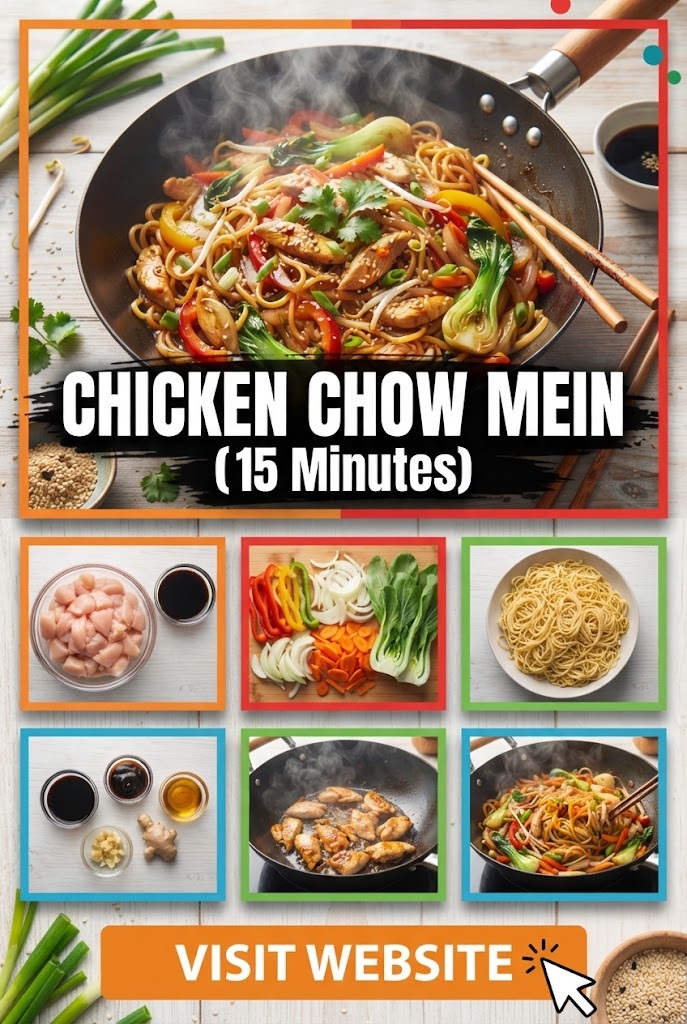
Chicken Chow Mein is one of those wonderfully fast meals that proves a satisfying dinner does not need to take an hour. With tender chicken, chewy noodles, crisp vegetables, aromatic garlic and ginger, and a savory homemade chow mein sauce, this recipe comes together in about 15 minutes from start to finish.
It is perfect for busy weeknights, quick lunches, meal prep, or anytime you are craving takeout-style noodles without leaving home. The secret is preparation: slice everything before you turn on the stove because the cooking itself moves very quickly.
This recipe is designed to give you that classic restaurant-style combination of springy noodles, juicy chicken, crunchy vegetables, and a glossy sauce that coats every strand.
Why You Will Love This Chicken Chow Mein
There are plenty of reasons to add this recipe to your regular dinner rotation.
Ready in 15 minutes
The ingredients cook quickly, making this an excellent option when you are hungry and short on time.
Better than takeout
You control the amount of oil, salt, sweetness, vegetables, and chicken. The result is fresh and flavorful rather than overly greasy.
One-pan meal
Once the noodles are prepared, everything comes together in one large wok or skillet.
Easy to customize
You can add mushrooms, bell peppers, snow peas, cabbage, bean sprouts, broccoli, or other vegetables you have available.
Family-friendly
The sauce is savory, slightly sweet, and flavorful without being overwhelmingly spicy. Add chili sauce separately if you want heat.
Complete Chicken Chow Mein Recipe
Recipe at a Glance
Recipe: Chicken Chow Mein
Preparation Time: 7 minutes
Cooking Time: 8 minutes
Total Time: About 15 minutes
Servings: 4
Cuisine: Chinese-inspired
Course: Main Course
Difficulty: Easy
Ingredients
For the Chicken
- 1 pound boneless, skinless chicken breast or chicken thighs
- 1 tablespoon soy sauce
- 1 teaspoon cornstarch
- 1 teaspoon sesame oil
- ½ teaspoon freshly ground black pepper
For the Noodles
- 12 ounces chow mein noodles
- Water, for cooking the noodles
- 1 teaspoon sesame oil, optional
For the Vegetables
- 1 tablespoon neutral cooking oil
- 3 cloves garlic, finely minced
- 1 teaspoon fresh ginger, grated or finely minced
- 2 cups shredded green cabbage
- 1 medium carrot, julienned or thinly sliced
- 1 cup bean sprouts
- ½ medium onion, thinly sliced
- ½ cup sliced green onions
For the Chow Mein Sauce
- ¼ cup low-sodium soy sauce
- 2 tablespoons oyster sauce
- 1 tablespoon hoisin sauce
- 1 tablespoon toasted sesame oil
- 1 teaspoon rice vinegar
- 1 teaspoon brown sugar
- ½ teaspoon white pepper or black pepper
- 2 tablespoons water
Optional Garnishes
- Sliced green onions
- Toasted sesame seeds
- Red pepper flakes
- Chili oil
- Sliced fresh chili peppers
- Fresh cilantro
Ingredient Form and Preparation
Good preparation is especially important for a 15-minute recipe. Chow mein is a stir-fry, so once the pan becomes hot, you do not have much time to stop and chop ingredients.
Chicken
Use boneless, skinless chicken breast for a leaner result or boneless chicken thighs for extra juiciness.
Slice the chicken into thin strips approximately ¼ inch thick. Thin pieces cook quickly and remain tender.
Toss the chicken with soy sauce, cornstarch, sesame oil, and black pepper.
The cornstarch creates a light coating around the chicken and helps retain moisture during the high-heat cooking process.
Noodles
Chow mein noodles are ideal because they have a firm, springy texture.
Depending on the package, some chow mein noodles are fresh and only need brief boiling or soaking, while dried varieties require longer cooking.
Always follow the package instructions.
The important point is to avoid overcooking the noodles. They should be just tender because they will continue cooking when added to the hot wok.
Drain them thoroughly.
If they are sticking together, toss them with a small amount of sesame oil.
Cabbage
Shredded cabbage adds crunch, sweetness, and texture.
Slice it thinly so that it cooks quickly while still retaining a slight bite.
Carrot
Cut the carrot into thin matchsticks or very thin slices.
Avoid large chunks because they take longer to cook and can remain hard while the other vegetables become soft.
Onion
Thinly sliced yellow, white, or red onion can be used.
Onion adds sweetness and aromatic flavor to the stir-fry.
Bean Sprouts
Bean sprouts should be added near the end.
They only need a short amount of cooking time. Overcooking makes them watery and soft.
How to Make Chicken Chow Mein
Step 1: Prepare Everything Before Cooking
Begin by slicing the chicken and vegetables.
Mix all sauce ingredients in a small bowl.
Cook and drain the noodles.
Keep the chicken, vegetables, noodles, sauce, garlic, and ginger close to the stove.
This preparation step may seem unnecessary, but it is one of the biggest secrets to successful stir-frying.
Once your pan is hot, everything needs to happen quickly.
Step 2: Mix the Sauce
In a small bowl, combine:
- Soy sauce
- Oyster sauce
- Hoisin sauce
- Sesame oil
- Rice vinegar
- Brown sugar
- Pepper
- Water
Whisk until the sugar is mostly dissolved.
Taste a tiny amount if desired.
The sauce should be savory, slightly sweet, aromatic, and balanced by a little acidity.
If you prefer a sweeter chow mein, add another ½ teaspoon brown sugar.
For a saltier version, add a small amount of soy sauce.
Step 3: Cook the Chicken
Place a large wok or skillet over medium-high to high heat.
Add the cooking oil.
Once the oil is hot, add the chicken in a single layer.
Let it cook undisturbed for approximately 1–2 minutes.
Then stir-fry for another 2–3 minutes until the chicken is browned and cooked through.
Avoid overcrowding the pan.
If your pan is small, cook the chicken in two batches.
Transfer the cooked chicken to a plate.
Step 4: Cook the Aromatics
Add a little more oil if the pan looks dry.
Add the minced garlic and ginger.
Stir continuously for approximately 20–30 seconds.
Do not allow the garlic to burn.
The goal is simply to release its aroma.
You should immediately smell the garlic and ginger.
Step 5: Add the Vegetables
Add the sliced onion, carrots, and cabbage.
Stir-fry over high heat for about 2 minutes.
The vegetables should soften slightly but remain crisp.
Add the bean sprouts and cook for another 30–45 seconds.
Do not cook the vegetables until completely soft.
Classic chow mein is best when there is contrast between the tender noodles and crunchy vegetables.
Step 6: Add the Noodles
Add the cooked chow mein noodles to the wok.
Use tongs or two spatulas to gently toss everything together.
Do not aggressively stir or mash the noodles.
Lift and toss them so they become mixed with the vegetables.
Step 7: Add the Sauce
Pour the prepared chow mein sauce around the sides of the hot pan.
Let it hit the hot surface for a few seconds before tossing everything together.
This helps develop a deeper stir-fried aroma.
Toss the noodles, vegetables, and sauce together for approximately 1–2 minutes.
The noodles should become glossy and evenly coated.
Step 8: Return the Chicken
Add the cooked chicken back into the wok.
Toss everything together for another 30–60 seconds.
The chicken should be distributed evenly throughout the noodles.
Turn off the heat.
Step 9: Finish and Serve
Add sliced green onions.
Taste the chow mein.
If necessary, adjust the seasoning with a small splash of soy sauce or rice vinegar.
For spicy chow mein, add chili oil, chili flakes, or sliced fresh chilies.
Serve immediately while the noodles are hot.
Detailed Cooking Timeline
For a true 15-minute meal, organize the cooking process like this:
Minutes 0–3
- Slice chicken.
- Chop vegetables.
- Mix sauce.
Minutes 3–6
- Cook noodles according to package directions.
- Drain well.
Minutes 6–9
- Heat wok.
- Cook chicken.
- Remove chicken.
Minutes 9–11
- Cook garlic and ginger.
- Stir-fry vegetables.
Minutes 11–14
- Add noodles.
- Add sauce.
- Return chicken.
- Toss everything together.
Minute 15
- Garnish.
- Taste.
- Serve.
The exact time depends on your noodles and how quickly you prepare the ingredients.
What Makes Great Chow Mein?
The best Chicken Chow Mein has several contrasting qualities.
The chicken should be tender.
The noodles should be chewy rather than mushy.
The vegetables should retain some crunch.
The sauce should be savory and glossy.
The garlic and ginger should provide a fragrant foundation.
And the entire dish should taste balanced rather than simply salty.
High heat is an important part of achieving this result.
Choosing the Right Noodles
There are several types of noodles that can work in chow mein.
Fresh Chow Mein Noodles
These are often the best option when available.
They usually have a pleasant chewy texture and cook quickly.
Dried Chow Mein Noodles
Dried noodles are convenient and widely available.
Cook them according to the package directions, but avoid overcooking.
Egg Noodles
Egg noodles can be an excellent substitute.
They provide a similar springy texture.
Spaghetti
In a pinch, regular spaghetti can work.
It will not taste exactly like traditional chow mein, but it can still make a delicious quick stir-fry.
Cook it until just al dente before adding it to the wok.
How to Keep Chicken Tender
Chicken breast can become dry if overcooked.
Several simple techniques help prevent this.
Slice thinly
Thin pieces cook quickly and evenly.
Use cornstarch
A small amount creates a protective coating and helps keep moisture inside.
Use high heat
High heat cooks the exterior quickly without requiring a long cooking time.
Do not overcrowd the pan
Overcrowding causes the chicken to steam instead of sear.
Remove it when cooked
Do not leave chicken sitting in the wok while you cook the vegetables.
Returning it at the end prevents overcooking.
Vegetable Variations
One of the best things about chow mein is its flexibility.
You can add:
- Bell peppers
- Broccoli
- Mushrooms
- Snow peas
- Bok choy
- Baby corn
- Water chestnuts
- Shredded zucchini
- Spinach
- Napa cabbage
- Green beans
For the best texture, slice harder vegetables thinly.
Soft vegetables can be added later.
How to Make Spicy Chicken Chow Mein
For a spicy version, add one or more of the following:
- 1 teaspoon chili oil
- 1 teaspoon chili garlic sauce
- ½ teaspoon crushed red pepper
- 1 sliced red chili
- 1 teaspoon sriracha
Add spicy ingredients to the sauce for even distribution.
If serving children or people with different spice preferences, keep the main dish mild and serve chili oil separately.
How to Make Chicken Chow Mein Less Salty
Soy sauce and oyster sauce both contain salt, so balance is important.
Use low-sodium soy sauce when possible.
Do not add extra salt before tasting.
If the finished noodles taste too salty, add more unsalted noodles or vegetables.
A small splash of rice vinegar can also help balance a sauce that tastes overly salty.
How to Make It Extra Saucy
If you prefer very saucy noodles, increase the sauce slightly.
Add:
- 2 extra tablespoons water
- 1 tablespoon soy sauce
- 1 tablespoon oyster sauce
However, avoid adding too much liquid at once.
Too much sauce can make the noodles soggy.
The ideal chow mein should be glossy rather than swimming in sauce.
Common Mistakes to Avoid
Overcooking the Noodles
Soft noodles can quickly turn mushy during stir-frying.
Cook them just until tender.
Using a Cold Pan
A hot wok or skillet is essential.
If the pan is not hot enough, the ingredients release water and steam instead of developing a stir-fried flavor.
Overcrowding
Too many ingredients at once lower the temperature.
Use a large wok or skillet.
Adding Everything at Once
Chicken, vegetables, noodles, and sauce have different cooking times.
Cook them in stages.
Burning the Garlic
Garlic burns quickly over high heat.
Cook it briefly before adding vegetables.
Adding Too Much Sauce
More sauce does not necessarily mean more flavor.
Too much liquid can make the noodles soggy.
Best Pan for Chicken Chow Mein
A traditional wok is ideal because its shape allows you to move ingredients around the hot surface.
However, a large skillet works extremely well.
If using a skillet, choose one that is wide enough to hold the ingredients without overcrowding.
A 12-inch skillet is a good size for a four-serving batch.
Meal Prep Instructions
Chicken Chow Mein can be prepared ahead of time.
Allow the finished noodles to cool slightly.
Place them in airtight containers.
Refrigerate for up to 3–4 days.
For the best texture, store the noodles in individual portions.
When reheating, use a skillet over medium-high heat.
Add a tablespoon of water and toss until heated through.
You can also microwave it, although the noodles may become slightly softer.
Can You Freeze Chicken Chow Mein?
Yes, although the texture of the vegetables may change slightly after freezing.
For best results:
- Cool the cooked chow mein completely.
- Divide it into airtight freezer-safe containers.
- Freeze for up to approximately 2 months for best quality.
- Thaw overnight in the refrigerator.
- Reheat thoroughly in a skillet.
Freshly prepared chow mein will always have the best texture, but frozen portions can be convenient.
What to Serve With Chicken Chow Mein
Chicken Chow Mein is a complete meal by itself.
However, if you want a larger Asian-inspired dinner, serve it with:
- Vegetable spring rolls
- Steamed dumplings
- Egg rolls
- Cucumber salad
- Asian slaw
- Steamed edamame
- Stir-fried vegetables
- Hot and sour soup
- Egg drop soup
Because chow mein already contains noodles and vegetables, simple side dishes usually work best.
How to Store Leftovers
Allow leftovers to cool and refrigerate them promptly in an airtight container.
Store refrigerated Chicken Chow Mein for approximately 3–4 days.
When reheating, make sure the chicken and noodles are heated thoroughly.
Avoid repeatedly reheating the entire batch.
Instead, heat only the portion you plan to eat.
Frequently Asked Questions
Can I use chicken thighs?
Absolutely.
Chicken thighs contain more fat than breast meat, making them particularly juicy and flavorful.
Slice them thinly and cook until completely done.
Can I make chow mein without oyster sauce?
Yes.
You can substitute additional hoisin sauce or use a vegetarian oyster-style sauce.
The flavor will be slightly different but still delicious.
Can I use vegetables I already have?
Yes.
Chow mein is ideal for using leftover vegetables.
Just remember to slice them thinly so they cook quickly.
Why are my noodles sticky?
The noodles may have been overcooked or not drained properly.
Rinse them according to the noodle package instructions when appropriate, drain thoroughly, and avoid letting them sit in excess cooking water.
Can I make this recipe vegetarian?
Yes.
Leave out the chicken and use vegetarian oyster sauce.
Add mushrooms, tofu, broccoli, bell peppers, or extra cabbage.
Can I use leftover cooked chicken?
Definitely.
Slice or shred the cooked chicken and add it near the end of cooking so it does not become dry.
Is Chicken Chow Mein spicy?
This version is not inherently spicy.
Add chili oil or chili sauce if you want heat.
Expert Tips for Restaurant-Style Chicken Chow Mein
1. Prepare first
Never begin stir-frying before everything is chopped and measured.
2. Keep the heat high
High heat helps create the characteristic stir-fried flavor.
3. Use enough oil
You do not need a huge amount, but there should be enough to prevent sticking.
4. Don’t drown the noodles
A concentrated sauce creates better flavor than excessive liquid.
5. Add sauce gradually if needed
Different noodle brands absorb sauce differently.
Start with the recommended amount and add more only if necessary.
6. Keep vegetables crisp
Slightly crunchy vegetables make the dish much more interesting.
7. Serve immediately
Chow mein is at its best straight from the wok.
Nutrition Information
Approximate nutrition per serving will vary depending on the noodles, chicken, sauces, and exact quantities used.
A serving typically provides:
- Protein from chicken
- Carbohydrates from noodles
- Fiber and micronutrients from vegetables
- Fat from cooking oil and sesame oil
For a lighter version, increase the vegetables, use lean chicken breast, reduce the oil, and choose low-sodium sauces.
Final Recipe Card
Chicken Chow Mein — 15 Minutes
Ingredients
Chicken
- 1 pound boneless skinless chicken
- 1 tablespoon soy sauce
- 1 teaspoon cornstarch
- 1 teaspoon sesame oil
- ½ teaspoon black pepper
Noodles
- 12 ounces chow mein noodles
Vegetables
- 1 tablespoon cooking oil
- 3 garlic cloves, minced
- 1 teaspoon fresh ginger
- 2 cups shredded cabbage
- 1 carrot, thinly sliced
- 1 cup bean sprouts
- ½ onion, sliced
- ½ cup green onions
Sauce
- ¼ cup low-sodium soy sauce
- 2 tablespoons oyster sauce
- 1 tablespoon hoisin sauce
- 1 tablespoon sesame oil
- 1 teaspoon rice vinegar
- 1 teaspoon brown sugar
- ½ teaspoon pepper
- 2 tablespoons water
Directions
- Slice the chicken thinly and toss it with soy sauce, cornstarch, sesame oil, and pepper.
- Prepare the chow mein noodles according to package directions. Drain well.
- Mix all sauce ingredients in a small bowl.
- Heat a large wok or skillet over high heat.
- Add oil and stir-fry the chicken for 3–4 minutes, until cooked through. Remove from the pan.
- Add garlic and ginger and cook for about 30 seconds.
- Add onion, carrot, and cabbage. Stir-fry for approximately 2 minutes.
- Add bean sprouts and cook for another 30–45 seconds.
- Add cooked noodles.
- Pour in the chow mein sauce and toss everything together.
- Return the cooked chicken to the pan.
- Stir-fry for another 30–60 seconds.
- Add green onions.
- Taste and adjust seasoning.
- Serve immediately.
Conclusion
Chicken Chow Mein is the perfect recipe when you want a flavorful homemade dinner without spending a lot of time in the kitchen. The combination of tender chicken, chewy noodles, crisp vegetables, garlic, ginger, and a savory homemade sauce creates a meal that tastes far more complicated than it actually is.
The most important technique is preparation. Have your ingredients sliced, your sauce mixed, and your noodles ready before the wok gets hot. From there, the cooking happens quickly.
For an especially delicious result, use high heat, avoid overcrowding the pan, keep the vegetables slightly crisp, and add the chicken back only at the end. You can also customize the recipe with your favorite vegetables, adjust the sweetness or saltiness of the sauce, or add chili oil for extra heat.
Once you master this basic method, Chicken Chow Mein can become a reliable 15-minute dinner that is easy to customize, budget-friendly, and perfect for satisfying those takeout cravings at home.
