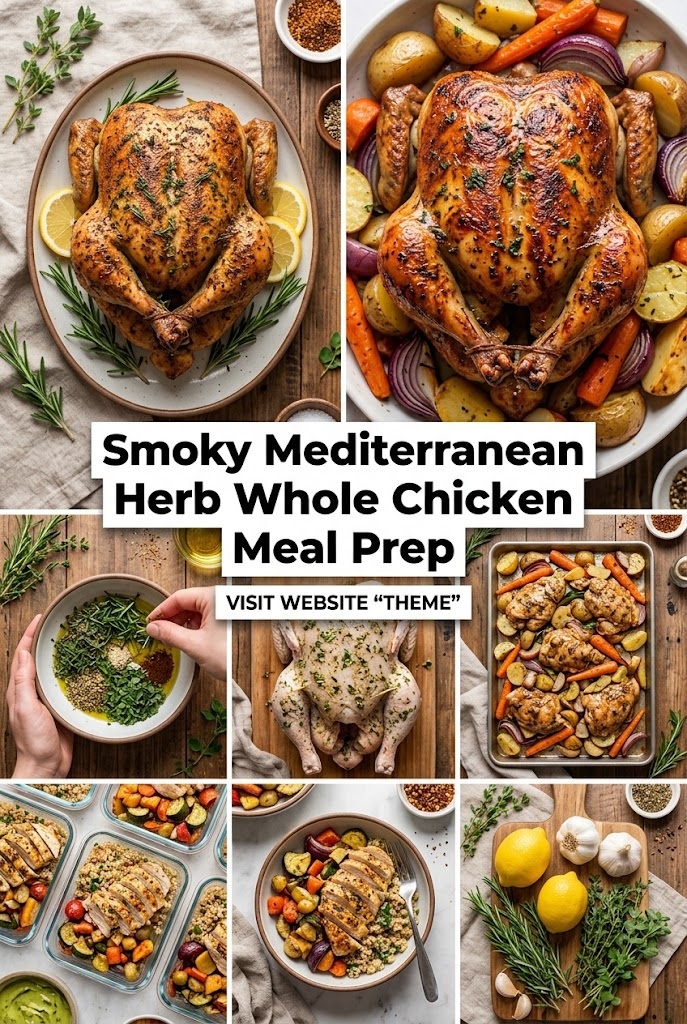
The modern kitchen is a place of efficiency, but it should never be a place where flavor is sacrificed for convenience. When we talk about “meal prep,” the image that often comes to mind is a stack of plastic containers filled with bland, boiled chicken and unseasoned broccoli. It is time to shatter that stereotype. Enter the Smoky Mediterranean Herb Whole Chicken.
This isn’t just a recipe; it’s a strategic culinary system. By roasting a whole chicken infused with the robust, aromatic flavors of the Mediterranean—think rosemary, oregano, garlic, and the deep, smoldering heat of smoked paprika—you create a versatile protein base that can power a week’s worth of gourmet-style meals. Whether you are a busy professional, a fitness enthusiast, or someone who simply loves good food, mastering the whole bird is the ultimate kitchen “level-up.”
Why the Whole Chicken is the King of Meal Prep
Before diving into the spices and the smoke, we must understand why the whole chicken is superior to buying individual cuts like breasts or thighs.
- Cost-Effectiveness: Pound for pound, a whole chicken is significantly cheaper than pre-cut parts. You aren’t paying the “butcher’s tax” for someone else to break the bird down.
- Flavor Variety: A whole bird provides both white and dark meat. This prevents “palate fatigue” throughout the week. You can have the lean breast for lunch and the rich, succulent thighs for dinner.
- The Bone-In Benefit: Cooking meat on the bone preserves moisture and adds depth to the flavor. Furthermore, the carcass can be transformed into a nutrient-dense bone broth, providing yet another layer to your meal prep.
- The Skin Factor: When roasted correctly, the skin becomes a crispy, smoky parchment that seals in juices. Even if you choose not to eat the skin for caloric reasons, its presence during the cooking process is vital for the texture of the meat.
The Mediterranean Flavor Profile: A Scientific Synergy
The Mediterranean diet is world-renowned not just for its health benefits but for its balance. The flavor profile of this meal prep centers on three pillars: Acidity, Aromatics, and Earthy Smoke.
- The Aromatics: Rosemary, thyme, and oregano are the “holy trinity” of Mediterranean herbs. They contain volatile oils that are released under heat, penetrating the meat and providing an earthy, floral backbone.
- The Acidity: Lemon juice and zest serve a functional purpose. The acid helps break down tough muscle fibers, while the citrus brightness cuts through the richness of the chicken fat.
- The Smoky Element: Traditional Mediterranean cooking often involves wood-fired ovens. In a modern kitchen, we replicate this using Pimentón de la Vera (Spanish Smoked Paprika). This spice provides a deep, woodsy aroma and a beautiful brick-red color without the need for a charcoal grill.
Sourcing Your Ingredients: Quality Over Quantity
To achieve a restaurant-quality result, the quality of your bird matters. When shopping for your Mediterranean meal prep, look for the following:
- Air-Chilled Chicken: Most mass-market chickens are water-chilled, meaning they soak up excess water weight. This leads to soggy skin and diluted flavor. Air-chilled birds are cooled with cold air, resulting in a more concentrated chicken flavor and superior skin crispiness.
- Organic/Pasture-Raised: If your budget allows, pasture-raised chickens have a higher Omega-3 content and a more robust flavor profile due to their natural diet.
- Fresh vs. Dried Herbs: While dried oregano is often preferred in Mediterranean cooking for its concentrated punch, always use fresh rosemary and thyme for the roasting process. The fresh sprigs release moisture and oils more slowly, preventing them from burning in the high heat of the oven.
The Master Recipe: Smoky Mediterranean Herb Whole Chicken
This recipe is designed to produce a bird that is juicy on the inside, crispy on the outside, and deeply seasoned throughout.
Ingredients
The Bird:
- 1 Whole Chicken (approx. 4–5 lbs)
- 2 tablespoons extra-virgin olive oil
The Smoky Herb Rub:
- 2 tablespoons smoked paprika (Pimentón)
- 1 tablespoon dried oregano
- 1 tablespoon fresh rosemary, finely minced
- 1 tablespoon fresh thyme leaves
- 1 tablespoon garlic powder (or 4 cloves fresh minced garlic)
- 1 teaspoon onion powder
- 1 teaspoon red pepper flakes (optional, for heat)
- 2 teaspoons kosher salt
- 1 teaspoon freshly cracked black pepper
The Cavity Aromatics:
- 1 whole lemon, halved
- 1 head of garlic, sliced crosswise
- A handful of fresh herb sprigs (rosemary, thyme, parsley)
Step-by-Step Instructions
1. Preparation and Drying
The enemy of crispy skin is moisture. Remove the chicken from its packaging and pat it thoroughly dry with paper towels—inside and out. For the best results, place the chicken on a wire rack in the fridge for 2–4 hours (uncovered) to let the skin air-dry.
2. The Spatchcock Technique (Optional but Recommended)
For faster, more even cooking, consider “spatchcocking” (butterflying) the bird. Use kitchen shears to cut out the backbone, then flip the bird over and press down on the breastbone until it cracks and lies flat. This ensures the dark meat and white meat finish cooking at the same time.
3. Seasoning
Rub the olive oil all over the chicken. This acts as the “glue” for your spices. Mix your smoky herb rub in a small bowl and apply it generously. Crucial Tip: Gently lift the skin over the breast and thighs and rub the spice mixture directly onto the meat. This ensures the flavor isn’t just on the surface.
4. Stuffing the Cavity
If roasting whole (not spatchcocked), place the lemon halves, garlic head, and fresh herbs inside the cavity. As the chicken heats up, these aromatics will steam from the inside, flavoring the meat from within.
5. Roasting
Preheat your oven to 425°F (218°C). High heat is essential for that smoky, charred exterior. Place the chicken in a roasting pan or a large cast-iron skillet. Roast for approximately 60–75 minutes, or until the internal temperature reaches 165°F in the thickest part of the thigh.
6. The Resting Period
Do not cut the chicken immediately. Let it rest for at least 15–20 minutes. This allows the juices to redistribute. If you cut it too soon, all that delicious moisture will run out onto the cutting board, leaving you with dry meal prep.
Mastering the Meal Prep: A Five-Day Strategy
Now that you have your master bird, the goal is to transform it into various meals to avoid boredom. Here is how to break down and store your Smoky Mediterranean Chicken.
Day 1: The Classic Roast Dinner
Enjoy the chicken fresh out of the oven. Serve a drumstick and a slice of breast with roasted lemon-herb potatoes and a side of sautéed kale. The skin is at its peak crispiness now, so enjoy it!
Day 2: The Mediterranean Grain Bowl
- Base: Quinoa or Farro.
- Protein: Shredded breast meat.
- Toppings: Cucumber, cherry tomatoes, kalamata olives, and feta cheese.
- Dressing: A simple lemon-tahini drizzle.
Day 3: Smoky Chicken Pita Pockets
- Base: Whole wheat pita bread.
- Protein: Chopped thigh meat.
- Toppings: A thick layer of hummus, pickled red onions, and fresh arugula.
- Sauce: Tzatziki (Greek yogurt, cucumber, garlic).
Day 4: Roasted Vegetable & Chicken Salad
- Base: Mixed baby greens.
- Protein: Cold sliced chicken.
- Toppings: Roasted bell peppers, zucchini, and artichoke hearts.
- Crunch: Toasted pine nuts or sunflower seeds.
Day 5: Mediterranean “Pasta” (Low Carb Option)
- Base: Zucchini noodles or chickpea pasta.
- Protein: Any remaining chicken bits.
- Sauce: A quick pan sauce made with olive oil, garlic, sun-dried tomatoes, and a splash of white wine (or chicken broth).
Essential Side Dishes for Mediterranean Meal Prep
A protein is only as good as its companions. To round out your Mediterranean prep, focus on these three categories:
1. The Grains
- Lemon-Garlic Quinoa: Cook quinoa in chicken broth instead of water for extra flavor. Once cooked, fold in lemon zest and minced parsley.
- Tabbouleh: A herb-forward salad made with cracked bulgur, massive amounts of parsley, mint, and tomatoes. It stays fresh in the fridge for days.
2. The Vegetables
- Ratatouille-Inspired Roast: Cube eggplant, zucchini, and bell peppers. Toss them in the same smoky paprika and oregano rub and roast them alongside the chicken.
- Blanched Green Beans: Quickly blanch green beans and toss them in a garlic-infused olive oil. They provide a necessary crunch to the meal prep containers.
3. The Sauces (The Secret to Moisture)
When you reheat chicken, it can naturally lose some moisture. A good sauce solves this.
- Traditional Tzatziki: The moisture from the cucumber and the fat from the Greek yogurt create a cooling contrast to the smoky chicken.
- Roasted Red Pepper Coulis: Blend roasted red peppers with garlic, olive oil, and a touch of balsamic vinegar for a vibrant, smoky sauce.
- Toum (Lebanese Garlic Sauce): A fluffy, potent garlic whip that acts as the ultimate condiment for Mediterranean poultry.
The Science of Reheating: Keeping it Juicy
The biggest complaint about meal-prepped chicken is that it becomes “rubbery” or “dry” after a trip to the microwave. Follow these tips to ensure your Smoky Mediterranean Chicken remains succulent:
- Low and Slow: If you have an office toaster oven, reheat the chicken at 300°F covered with foil. This gently warms the meat without overcooking it.
- The “Splash” Method: Before microwaving, add a teaspoon of water or chicken broth to the container and cover it with a damp paper towel. This creates a steam chamber that rehydrates the meat.
- Slice Against the Grain: When prepping your containers, always slice the breast meat against the grain. This breaks up the muscle fibers, making the meat feel more tender in the mouth.
- Keep the Sauce Separate: Never pour your sauce over the chicken before storing. Keep it in a small 2-ounce ramekin and add it after reheating to preserve the textures.
Nutritional Breakdown and Health Benefits
This Smoky Mediterranean Herb Chicken is a nutritional powerhouse, fitting into several dietary lifestyles including Keto, Paleo, and the Mediterranean Diet.
- High-Quality Protein: Essential for muscle repair and satiety. A 4-ounce serving of this chicken provides roughly 25-30 grams of protein.
- Healthy Fats: By using extra-virgin olive oil, you are consuming monounsaturated fats which are linked to heart health and reduced inflammation.
- Phytochemicals: The herbs used (rosemary and oregano) are high in antioxidants. Rosmarinic acid, found in rosemary, has been studied for its anti-inflammatory properties.
- Metabolic Boost: Smoked paprika and red pepper flakes contain capsaicin, which can slightly increase metabolic rate and aid in digestion.
Advanced Prep: Making Use of the Carcass
The meal prep doesn’t end when the meat is gone. The bones of a roasted Smoky Mediterranean chicken are gold.
Smoky Mediterranean Bone Broth:
- Place the picked-over carcass into a large pot or slow cooker.
- Add an onion (skin on for color), a carrot, a celery stalk, and any leftover herb stems.
- Add 1 tablespoon of apple cider vinegar (this helps extract minerals from the bones).
- Cover with water and simmer for 12–24 hours.
- Strain and store.
This broth will have a faint hint of the smoked paprika and herbs, making it an incredible base for a Mediterranean lemon-chicken soup (Avgolemono) or for cooking your grains the following week.
Troubleshooting Common Chicken Disasters
Even with the best intentions, things can go wrong. Here is how to fix them:
- Rubbery Skin: This usually happens if the oven wasn’t hot enough or the chicken wasn’t dry before roasting. Fix: If your prepped chicken has soggy skin, flash-fry the slices in a pan with a little olive oil for 2 minutes to crisp them back up.
- Bland Meat: If the flavor didn’t penetrate the breast meat, it means you didn’t season under the skin. Fix: Toss the shredded chicken in a little extra virgin olive oil, a squeeze of lemon, and a pinch of the dry rub before putting it in your meal prep containers.
- Pink at the Bone: Sometimes the meat near the bone looks pink even when the temperature is 165°F. This is often due to the age of the chicken (younger chickens have more porous bones). As long as the juice runs clear and the thermometer reads 165°F, it is safe to eat.
The Cultural Connection: A Taste of History
The flavors of this meal prep are inspired by the coastal regions of Spain, Greece, and Italy. In Spain, the use of Pimentón is a culinary staple, introduced after the discovery of the Americas. In Greece, the reliance on wild-grown oregano and lemon define the “Ladolemono” sauce used on almost all grilled meats. By combining these, we are tapping into a thousand-year-old tradition of preserving and flavoring food with the gifts of the Mediterranean landscape.
When you sit down to eat your Day 3 pita pocket or your Day 5 zucchini noodle pasta, you aren’t just “consuming fuel.” You are participating in a culinary heritage that prioritizes the quality of the ingredient and the boldness of the herb.
Shopping List Summary
To make this meal prep a reality this weekend, add these items to your grocery list:
- Meat: 1 Whole Air-Chilled Chicken (4-5 lbs).
- Produce: 3 Lemons, 2 heads of Garlic, Fresh Rosemary, Fresh Thyme, Fresh Parsley, English Cucumber, Cherry Tomatoes, Arugula, Bell Peppers, Zucchini.
- Pantry: Extra Virgin Olive Oil, Smoked Paprika (Pimentón), Dried Oregano, Kosher Salt, Black Peppercorns, Quinoa or Farro, Hummus, Feta Cheese, Kalamata Olives, Tahini.
- Bakery: Whole Wheat Pita or Sourdough.
Final Thoughts: The Joy of a Stocked Fridge
There is a profound psychological benefit to knowing that your meals for the week are taken care of. It reduces decision fatigue, prevents the “emergency” ordering of unhealthy takeout, and saves a significant amount of money.
The Smoky Mediterranean Herb Whole Chicken is more than just a meal prep; it’s a lifestyle choice. It’s the choice to eat like a king on a budget, to nourish your body with ancient flavors, and to master the art of the kitchen. So, preheat your oven, dry off that bird, and get ready for a week of the most delicious, aromatic, and satisfying meals you’ve ever prepared.
Your future self—the one looking for a quick lunch on Wednesday—will thank you.
