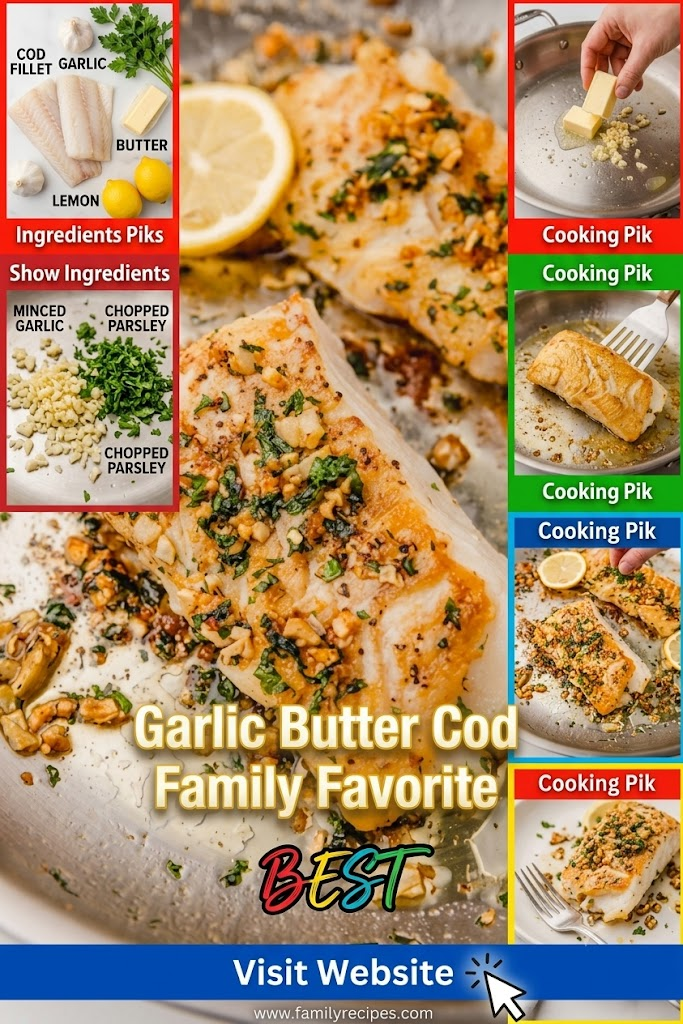
In this guide, we aren’t just looking at a list of ingredients. We are exploring the technique of the perfect sear, the importance of ingredient temperature, and the art of the pan sauce. Whether you are a seasoned home cook or someone who usually avoids the seafood counter, this recipe will give you the confidence to serve a restaurant-quality meal in the comfort of your own home.
Why This Recipe Deserves a Spot in Your Rotation
If you are looking for a reason to move this recipe to the top of your “must-try” list, consider the balance of effort versus reward. In the world of culinary arts, we often equate deep flavor with long braises or complex techniques. This Garlic Butter Cod defies that logic.
- Speed: From fridge to table, you are looking at less than 20 minutes. In the time it takes to boil a pot of pasta, your main course is finished.
- Nutritional Density: Cod is a fantastic source of lean protein, B vitamins, and phosphorus. It’s low in mercury compared to larger predatory fish, making it a safer choice for children and pregnant women.
- Versatility: This dish plays well with almost any side. Whether you want to keep it low-carb with roasted zoodles or go full comfort mode with garlic mashed potatoes, the cod adapts beautifully.
- Minimal Cleanup: If you use a high-quality oven-safe skillet, this can effectively be a one-pan meal. Fewer dishes mean more time relaxing after dinnerWhy You’ll Love This Recipe
Ready in just 20 minutes
Buttery, rich garlic flavor
Perfectly flaky and tender cod
Family-friendly and beginner-friendly
Made with simple pantry ingredients
Naturally low-carb and high in protein
Ingredients
For the Cod
4 cod fillets (about 6 oz / 170 g each)
2 tablespoons olive oil
4 tablespoons unsalted butter
5 garlic cloves, minced
1 teaspoon paprika
½ teaspoon onion powder
½ teaspoon salt (or to taste)
½ teaspoon black pepper
1 teaspoon Italian seasoning
1 tablespoon fresh parsley, chopped
1 tablespoon lemon juice
Lemon slices, for serving
Optional Garnish
Fresh parsley
Grated Parmesan cheese
Red pepper flakes
Lemon wedges
Kitchen Equipment
Large non-stick skillet
Spatula
Measuring spoons
Knife
Cutting board
Small bowl
Paper towels
Preparation Time
Prep Time: 10 minutes
Cook Time: 10 minutes
Total Time: 20 minutes
Servings
4 servings
Step-by-Step Instructions
Step 1: Prepare the Fish
Pat the cod fillets dry using paper towels. Removing excess moisture helps create a beautiful golden crust.
Season both sides with:
Salt
Black pepper
Paprika
Onion powder
Italian seasoning
Let the fish rest for 5 minutes.
Step 2: Heat the Pan
Heat olive oil in a large skillet over medium-high heat.
Once the oil is hot but not smoking, add the cod fillets.
Step 3: Sear the Cod
Cook for 3–4 minutes without moving the fish.
Carefully flip each fillet using a spatula.
Cook another 3–4 minutes until the fish flakes easily with a fork.
Remove the cod and set aside.
Step 4: Make the Garlic Butter Sauce
Reduce heat to medium.
Add butter to the same skillet.
Once melted, stir in the minced garlic.
Cook for 30–60 seconds until fragrant. Do not let the garlic brown.
Add:
Lemon juice
Chopped parsley
Stir well.
Step 5: Combine
Return the cooked cod to the skillet.
Spoon the garlic butter sauce over each fillet.
Cook for another 1 minute so the fish absorbs the buttery garlic flavor.
Step 6: Serve
Transfer to serving plates.
Garnish with:
Fresh parsley
Lemon slices
Optional Parmesan cheese
Red pepper flakes for a little heat
Serve immediately while hot.
Tips for Perfect Garlic Butter Cod
Pat the fish dry before seasoning.
Use fresh garlic for the best flavor.
Avoid overcooking—cod is done when it flakes easily with a fork.
Fresh lemon juice tastes brighter than bottled juice.
Let the fish rest for 2 minutes before serving.
What to Serve with Garlic Butter Cod
This dish pairs well with:
Garlic mashed potatoes
Steamed rice
Buttered noodles
Roasted asparagus
Green beans
Steamed broccoli
Caesar salad
Crispy roasted potatoes
Dinner rolls
Storage Instructions
Refrigerator
Store leftovers in an airtight container for up to 3 days.
Freezer
Freeze cooked cod for up to 2 months. Thaw overnight in the refrigerator before reheating.
Reheating
Skillet
Warm over low heat with a small amount of butter for 3–5 minutes.
Microwave
Heat in 30-second intervals until warmed through.
Recipe Variations
Add mushrooms for extra flavor.
Stir spinach into the garlic butter sauce.
Sprinkle Parmesan cheese over the fish before serving.
Use fresh dill instead of parsley.
Add a pinch of cayenne pepper for a spicy version.
Nutrition (Approximate Per Serving)
Calories: 320
Protein: 34 g
Fat: 19 g
Saturated Fat: 8 g
Carbohydrates: 3 g
Fiber: 0.5 g
Sugar: 0.5 g
Sodium: 520 mg
Cholesterol: 95 mg
Frequently Asked Questions
Can I use frozen cod?
Yes. Thaw it completely in the refrigerator and pat it dry before cooking.
How do I know when cod is cooked?
The fish is done when it reaches an internal temperature of 145°F (63°C) or flakes easily with a fork.
Can I bake the cod instead?
Yes. Bake at 400°F (200°C) for 12–15 minutes, then spoon the garlic butter sauce over the cooked fish before serving.
Can I use another type of fish?
Absolutely. This recipe also works well with haddock, halibut, tilapia, or pollock..
Choosing the Best Cod: Atlantic vs. Pacific
When you arrive at the seafood counter, you might notice two primary types of cod: Atlantic and Pacific. Understanding the difference is key to your success.
Atlantic Cod is often considered the “original” cod. It has a slightly sweet flavor and very large, thick flakes. It tends to be a bit firmer than its Pacific cousin. If you can find it fresh and sustainably sourced (look for the MSC blue label), it is a top-tier choice for searing.
Pacific Cod (also known as True Cod) has a slightly milder flavor and a more delicate, smaller flake. It is often a bit more moisture-heavy, which means you need to be extra diligent about patting it dry before it hits the pan to ensure you get a good crust rather than just steaming the fish.
Regardless of which you choose, look for fillets that are translucent and firm to the touch. Avoid any fish that has a strong odor or looks “milky,” as these are signs that the fish is past its prime. If you are using frozen cod, the most important rule is to let it thaw completely in the refrigerator overnight. Forcing a thaw under warm water will ruin the texture of the delicate muscle fibers.
The Essential Ingredient List
To achieve that signature “Family Favorite” status, every component needs to be high quality. Here is what you’ll need to gather:
- Cod Fillets: Aim for 6-ounce portions that are roughly the same thickness. This ensures they all finish cooking at the same time.
- Unsalted Butter: Using unsalted butter allows you to control the sodium levels perfectly. Look for a European-style butter (like Kerrygold) which has a higher fat content and less water, leading to a richer sauce.
- Fresh Garlic: This is non-negotiable. Jarred minced garlic has a metallic, acidic aftertaste that will ruin the delicate flavor of the fish. We want 4 to 5 large cloves, finely minced.
- Lemon: You will need both the zest and the juice. The zest provides the essential oils and floral notes, while the juice provides the acidity to cut through the richness of the butter.
- Olive Oil: A small amount of high-smoke-point oil (like light olive oil or avocado oil) helps prevent the butter from burning during the initial sear.
- Fresh Herbs: Parsley is the classic choice, but dill or chives also work beautifully. The freshness of the herbs at the end “wakes up” the entire dish.
- Spices: Kosher salt, freshly cracked black pepper, and a pinch of paprika. The paprika isn’t just for flavor; it helps give the fish a gorgeous golden-brown hue.
The Secret to the Perfect Pan-Sear
The biggest mistake people make with cod is moving it too much. Fish is delicate. Once it hits the hot oil, the proteins begin to bond and “grip” the pan. If you try to flip it too early, the fish will tear, and you’ll lose that beautiful crust.
Wait for the “release.” When the proteins have caramelized (the Maillard reaction), the fish will naturally lift away from the surface of the pan. This usually takes about 3 to 4 minutes on medium-high heat.
Furthermore, temperature control is vital. You want the pan hot enough to sear, but once you add the butter and garlic, you must drop the heat. Garlic burns in an instant, turning bitter and acrid. The goal is to “baste” the fish in the foaming garlic butter, much like a chef would do with a high-end ribeye steak.
Step-by-Step Instructions for Success
1. Preparation and Drying
Remove your cod fillets from the refrigerator about 15 minutes before cooking. This takes the chill off and allows for more even cooking. Use paper towels to pat the fish extremely dry on all sides. Moisture is the enemy of a good sear. If the fish is wet, it will steam rather than brown.
2. Seasoning
In a small bowl, mix your salt, pepper, and paprika. Season the fillets generously on both sides. Don’t be afraid to get a little heavy-handed here; cod is a thick fish and needs a good amount of seasoning to penetrate the meat.
3. The Initial Sear
Heat a large heavy-bottomed skillet (cast iron or stainless steel is best) over medium-high heat. Add a tablespoon of olive oil. Once the oil is shimmering and just starting to smoke, carefully lay the cod fillets into the pan. Lay them away from you to avoid oil splatters. Let them cook undisturbed for 3-4 minutes.
4. The Flip and the Butter Bath
Once the bottom edges look golden and the fish releases easily, flip the fillets gently using a fish spatula. Immediately reduce the heat to medium-low. Add the cubes of cold butter to the pan.
5. Infusing Flavor
As the butter melts and starts to foam, add the minced garlic. Use a spoon to continuously pour the melting garlic butter over the top of the fish fillets. This is called “arrosé,” and it ensures the top of the fish stays moist while picking up all that garlic flavor.
6. Finishing Touches
After about 2-3 more minutes of basting, the fish should be opaque and flake easily with a fork. Squeeze the fresh lemon juice into the butter sauce and sprinkle the lemon zest and fresh parsley over everything. Remove the pan from the heat immediately to prevent the garlic from over-browning.
Chef’s Tips for Restaurant-Quality Results
- The Spoon Technique: When basting, tilt the pan slightly so the butter pools at the bottom edge. This makes it easier to scoop up a large amount of garlic-infused butter to pour over the fish.
- Don’t Overcrowd: if your pan isn’t big enough for all the fillets to have an inch of space between them, cook them in two batches. Overcrowding drops the pan temperature and leads to soggy fish.
- Check the Temperature: If you have an instant-read thermometer, aim for an internal temperature of 145°F. However, many chefs prefer to pull the fish at 140°F, as carry-over cooking will bring it up to the perfect temperature while it rests for a minute.
- Cold Butter is Key: When making the pan sauce at the end, use cold butter. Cold butter emulsifies more slowly, creating a thicker, creamier sauce than warm or room-temperature butter.
Variations to Keep Things Interesting
While the classic garlic butter version is a masterpiece, you can easily tweak this recipe based on what you have in your pantry.
- The Mediterranean Twist: Add a tablespoon of drained capers and some halved cherry tomatoes to the pan when you add the butter. The burst of acidity from the tomatoes and the brine from the capers creates a vibrant, Piccata-style dish.
- Spicy Garlic Butter: If your family likes a little heat, add half a teaspoon of red pepper flakes to the butter along with the garlic. The heat infuses into the fat and coats the fish perfectly.
- Herb-Crusted Variation: Mix some Panko breadcrumbs with a bit of melted butter and lemon zest. After flipping the fish and adding the garlic butter, top the fillets with the breadcrumb mixture and pop the pan under the broiler for 60 seconds for a crunchy finish.
- White Wine Reduction: Before adding the butter, splash about 1/4 cup of dry white wine (like Pinot Grigio) into the pan to deglaze it. Let it reduce by half, then whisk in the butter. This adds a sophisticated depth of flavor found in fine dining.
Common Pitfalls (And How to Avoid Them)
- Overcooking the Fish: Cod goes from perfectly flaky to dry and chalky very quickly. Watch for the “flakes” to start separating. If the fish starts to “weep” white protein (called albumin), it’s likely getting too hot too fast.
- Burnt Garlic: As mentioned, garlic is delicate. If your garlic turns dark brown or black, it will taste bitter. If this happens, it’s best to wipe out the pan and start the butter sauce over. It’s worth the extra two minutes to save the dish.
- Using Synthetic Lemon Juice: Please, skip the plastic lemon-shaped squeeze bottle. The flavor is artificial and harsh. A real lemon provides a bright, citrusy lift that the bottled stuff simply cannot replicate.
- Not Resting the Fish: Just like a steak, fish benefits from a 2-minute rest. This allows the juices to redistribute so the fish stays moist when you cut into it.
Best Side Dishes to Serve with Garlic Butter Cod
The beauty of this dish is its adaptability. Here are three ways to plate it:
The Healthy Choice
Serve the cod over a bed of sautéed spinach and alongside roasted asparagus. The garlic butter sauce from the pan doubles as a dressing for the vegetables. This keeps the meal low-carb and keto-friendly without sacrificing any flavor.
The Comfort Classic
There is nothing quite like cod served over a heap of creamy mashed potatoes or a side of buttered rice pilaf. The starch soaks up the extra garlic butter, ensuring not a single drop of that liquid gold goes to waste.
The Bistro Style
Serve the fish with a simple arugula salad tossed in a light vinaigrette and a side of crusty sourdough bread. Use the bread to “mop” the pan—a tradition that is highly encouraged in this house!
Kitchen Equipment Essentials
You don’t need a professional kitchen to make this, but a few specific tools make the process much smoother:
- Fish Spatula: This is a long, thin, flexible metal spatula. It’s designed to slide under delicate fillets without breaking them. It’s a game-changer for any seafood lover.
- Cast Iron Skillet: For the best crust, cast iron is king. It retains heat exceptionally well, ensuring a consistent sear.
- Microplane: This is the best tool for zesting your lemon. It gets only the yellow part (the zest) and leaves behind the bitter white pith.
- Garlic Press: If you aren’t confident in your knife skills, a high-quality garlic press will give you a fine consistency that melts into the butter perfectly.
Sourcing Sustainability: Why It Matters
As we cook more seafood at home, it’s important to be mindful of where our food comes from. The cod fishing industry has seen significant fluctuations over the decades. By choosing MSC-certified (Marine Stewardship Council) or Monterey Bay Aquarium Seafood Watch “Green” rated cod, you are supporting fisheries that manage their stocks responsibly. This ensures that future generations will be able to enjoy this delicious fish just as we do today.
Storing and Reheating Leftovers
If you happen to have leftovers (which is rare!), cod can be stored in an airtight container in the refrigerator for up to two days.
Reheating is the tricky part. Never use the microwave for fish; it will turn it into a rubber tire. Instead, place the cod in a small baking dish with a splash of water or a little extra butter. Cover it tightly with foil and heat it in a 300°F oven for about 10-15 minutes until just warmed through. This “low and slow” method preserves the texture.
Alternatively, cold leftover cod is actually delicious flaked over a salad or mixed with a little Greek yogurt, celery, and herbs for a “Cod Salad” sandwich the next day.
Nutrition Breakdown (Per Serving)
- Calories: 280 kcal
- Protein: 32g
- Fat: 16g (mostly from the heart-healthy fats in olive oil and the moderate use of butter)
- Carbohydrates: 2g
- Sodium: 450mg (can be adjusted by controlling your salt)
Cod is an excellent source of Omega-3 fatty acids, which are essential for heart health and brain function. By preparing it at home, you avoid the heavy breading and deep-frying often associated with fish, making this a truly “guilt-free” luxury.
The Cultural Significance of Cod
Cod is often called “the fish that changed the world.” Historically, it was the backbone of many Atlantic economies. In New England, it was so vital that a “Sacred Cod” carving still hangs in the Massachusetts State House. While we treat it as a quick weeknight dinner today, we are participating in a culinary tradition that spans centuries. Bringing this fish to your family table is a small way of connecting with that history—and doing so with a lot of garlic and butter makes it all the better.
Making it Kid-Friendly
If you have children who are skeptical of “the green bits” (parsley), you can easily leave the herbs off their portion. Another trick for kids is to serve the cod in “nugget” form. Simply cut the fillets into smaller chunks before searing. They cook even faster this way and feel more approachable to little ones. The mild flavor of cod is very similar to chicken, so emphasizing that “it’s like a chicken nugget from the sea” often works wonders!
Frequently Asked Questions
Can I use frozen cod? Absolutely. In fact, unless you live right on the coast, “previously frozen” cod is often fresher than the “fresh” fish at the counter. Just ensure it is completely thawed and patted dry before you start.
What if I don’t have cod? This recipe works perfectly with any firm white fish. Halibut, haddock, pollock, or even sea bass are excellent substitutes. The cooking times may vary slightly depending on the thickness of the fillet.
Is it okay to leave the skin on? Most cod is sold skinless. If yours has the skin on, sear it skin-side down first for about 5 minutes to get it crispy. Crispy fish skin is packed with nutrients and flavor, though some people prefer to remove it.
Can I make this dairy-free? Yes. You can substitute the butter with a high-quality vegan butter alternative or simply use more olive oil. If using olive oil, you won’t get the same “foaming” effect, but the garlic and lemon will still create a delicious infused oil.
Why does my fish fall apart in the pan? This usually happens because the pan wasn’t hot enough when you started, or you tried to flip the fish too soon. Make sure the oil is shimmering and give the fish time to develop a crust.
How do I know when the garlic is “done”? The garlic should be a pale golden color and smell fragrant. If it starts to look like dark mahogany, it’s overdone.
What wine pairs best with Garlic Butter Cod? A crisp, high-acidity white wine is the best match. Look for a Sauvignon Blanc, a dry Riesling, or an unoaked Chardonnay. The acidity in the wine mimics the lemon juice, cutting through the richness of the butter.
Can I bake this instead of pan-searing? Yes. If you prefer to bake it, place the seasoned fish in a baking dish, pour the melted garlic butter over the top, and bake at 400°F for 12-15 minutes. You won’t get the same golden crust, but the fish will be incredibly tender and poached in butter.
How many cloves of garlic are too many? In this house? There is no such thing. But for this specific recipe, 4-5 cloves provide a strong flavor without overpowering the delicate fish.
Is cod a sustainable choice? Generally, yes, especially if it is Pacific Cod or MSC-certified Atlantic Cod. Always check the labels or ask your fishmonger about the source.
Conclusion
The beauty of the Garlic Butter Cod lies in its simplicity. It’s a reminder that we don’t need a pantry full of exotic ingredients or hours of prep time to create a meal that feels special. It’s about taking a few humble ingredients—fish, butter, garlic, lemon—and treating them with respect.
When you sit down to this meal, you’re not just eating a healthy dinner; you’re enjoying the results of a perfect sear and a well-balanced sauce. The way the buttery juices mingle with the tender, flaky fish is a culinary experience that never gets old. It’s a recipe that grows with you, one that you’ll eventually be able to make from memory, perhaps even passing it down to the next generation of home cooks in your family.
So, the next time you find yourself at the grocery store, staring at the seafood counter, pick up some cod. Grab a fresh lemon and a head of garlic. Go home, heat up that skillet, and treat your family to a meal that tastes like it came from a five-star kitchen. You’ve got the tips, you’ve got the technique, and now, you’ve got the recipe. Happy cooking!
