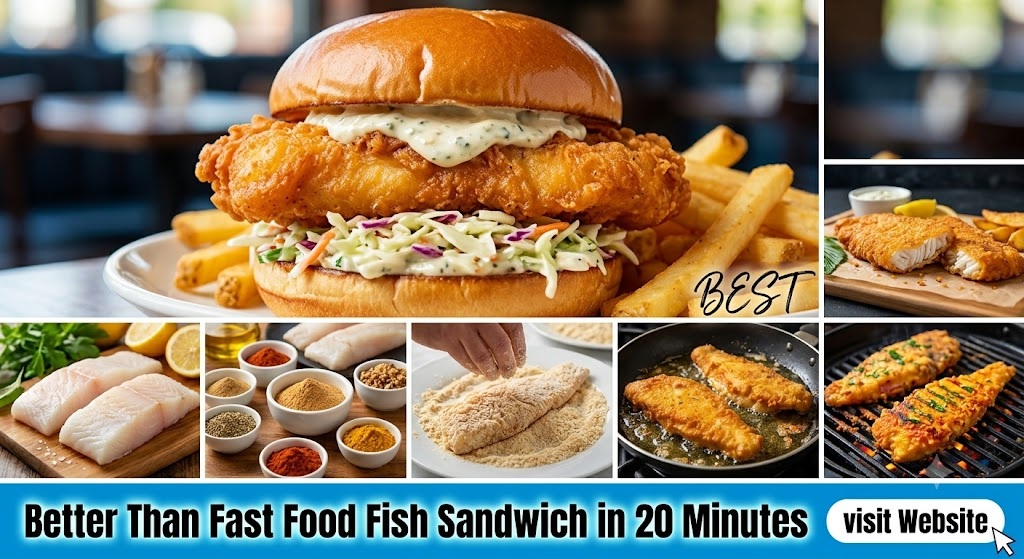
What if I told you that the perfect fish sandwich isn’t found in a paper bag? The true “Golden Standard” lives in your own kitchen. I am talking about a sandwich so crispy that you can hear the crunch from the next room. A sandwich featuring a thick, hand-cut fillet of wild-caught Atlantic cod, enveloped in a batter that is light, airy, and seasoned to perfection. We are elevating the game with a toasted, buttery brioche bun and a tartar sauce so bright and herbaceous it makes the jarred stuff look like a crime.
This isn’t just a recipe; it’s a revelation. Once you master the art of the perfect fry and the science of the batter, you will never look at a drive-thru menu the same way again. This is the sandwich that turns “Fish Friday” into a gourmet event.
The Secret to a Shatteringly Crisp Crust
The biggest pitfall of the home-cooked fish sandwich is the dreaded “soggy bottom.” Many home cooks struggle with a coating that slides off the fish or becomes limp within minutes. To achieve a sandwich that is truly better than fast food, we have to look at the chemistry of the batter.
We aren’t just using flour and water. To get that signature bubble and snap, we utilize a combination of all-purpose flour and cornstarch. Cornstarch is the secret weapon; it prevents too much gluten from forming, which results in a lighter, crispier shell rather than a bready, chewy one.
Furthermore, we use a carbonated element. Whether you choose a light lager or highly carbonated club soda, those bubbles are essential. When the cold, bubbly batter hits the 375°F oil, the gas expands rapidly, creating tiny pockets of air. This creates that “lacy” texture that distinguishes a professional-grade fish sandwich from a cafeteria square.
Finally, the temperature is king. You cannot guestimate oil temperature. We are aiming for a specific window that seals the fish instantly, preventing it from absorbing excess grease while ensuring the interior stays moist and flaky.
Choosing Your Catch: The Best Fish for the Job
Not all fish are created equal when it comes to the deep fryer. To replicate and then exceed the fast-food experience, you need a white fish that is mild, firm, and capable of being cut into thick, satisfying portions.
Atlantic Cod
This is the gold standard. Cod has a large, beautiful flake that holds up exceptionally well to battering. It’s mild enough that it won’t overwhelm the palate, but hearty enough to feel like a real meal. Look for “loin” cuts if possible, as they are thicker and more uniform.
Haddock
Haddock is a close cousin to cod. It is slightly sweeter and has a finer flake. In many parts of New England and the UK, haddock is actually the preferred choice for premium fish and chips or sandwiches. It’s an excellent alternative if cod isn’t available.
Alaskan Pollock
If you want to get as close to the “authentic” fast-food flavor profile as possible, Pollock is your fish. It is what most major chains use. It is thinner and a bit milder, making it a very budget-friendly option that still delivers a great result when handled with care.
Avoid Oily Fish
Stay away from salmon, tuna, or mackerel for this specific preparation. These fish are delicious, but their high oil content and strong flavors don’t play well with a heavy beer batter and tartar sauce. Save those for searing or grillingThere’s nothing better than biting into a crispy, golden fish sandwich with fresh toppings and a creamy homemade sauce. This homemade fish sandwich is crunchier, healthier, and more flavorful than most fast-food versions. It’s perfect for lunch, dinner, or weekend family meals.
Ingredients
For the Fish
- 4 white fish fillets (cod, tilapia, haddock, or pollock)
- 1 cup all-purpose flour
- 1 teaspoon salt
- 1 teaspoon black pepper
- 1 teaspoon garlic powder
- 1 teaspoon onion powder
- 1 teaspoon paprika
- ½ teaspoon cayenne pepper (optional)
- 2 large eggs
- 2 tablespoons milk
- 1½ cups panko breadcrumbs
- Vegetable oil for frying
For the Sandwich Sauce
- ½ cup mayonnaise
- 1 tablespoon ketchup
- 1 teaspoon Dijon mustard
- 1 teaspoon lemon juice
- 1 teaspoon sweet pickle relish
- ½ teaspoon garlic powder
- Pinch of black pepper
Sandwich Ingredients
- 4 brioche buns
- Lettuce leaves
- Tomato slices
- Dill pickle slices
- Cheese slices (optional)
- Butter for toasting buns
Equipment Needed
- Large frying pan or deep fryer
- Mixing bowls
- Whisk
- Tongs
- Paper towels
- Meat thermometer (optional)
How to Make Fish Sandwich Step by Step
Step 1: Prepare the Fish
Pat the fish fillets dry using paper towels. This helps the coating stick better and creates a crispier crust.
Step 2: Season the Flour
In a shallow bowl, combine:
- Flour
- Salt
- Black pepper
- Garlic powder
- Onion powder
- Paprika
- Cayenne pepper
Mix well.
Step 3: Prepare the Egg Mixture
Whisk together:
- Eggs
- Milk
until smooth.
Step 4: Add Breadcrumbs
Place the panko breadcrumbs in a separate bowl.
Step 5: Coat the Fish
Coat each fish fillet in this order:
- Flour mixture
- Egg mixture
- Panko breadcrumbs
Press the breadcrumbs gently so they stick well.
Step 6: Heat the Oil
Heat vegetable oil to 350°F (175°C).
The oil should be hot enough for frying without burning the coating.
Step 7: Fry the Fish
Carefully place the fish into the hot oil.
Cook for:
- 3–4 minutes per side
until golden brown and crispy.
The internal temperature should reach 145°F (63°C).
Transfer to paper towels to drain excess oil.
Step 8: Make the Sauce
Mix together:
- Mayonnaise
- Ketchup
- Dijon mustard
- Lemon juice
- Pickle relish
- Garlic powder
- Black pepper
Refrigerate until ready to use.
Step 9: Toast the Buns
Spread butter lightly on each bun.
Toast in a skillet for 1–2 minutes until golden.
Step 10: Assemble the Sandwich
Layer the sandwich as follows:
- Bottom bun
- Homemade sauce
- Lettuce
- Crispy fish fillet
- Cheese (optional)
- Tomato slices
- Pickles
- Extra sauce
- Top bun
Serve immediately while hot.
Tips for the Best Fish Sandwich
- Use fresh white fish for the best flavor.
- Panko breadcrumbs create the crispiest coating.
- Don’t overcrowd the pan while frying.
- Toast the buns to prevent sogginess.
- Let the fish rest for 2 minutes before assembling.
Optional Toppings
- Red onion
- Coleslaw
- Avocado slices
- Jalapeños
- American cheese
- Pepper Jack cheese
- Fresh dill
- Crispy bacon
Side Dishes
This fish sandwich pairs perfectly with:
- French fries
- Sweet potato fries
- Onion rings
- Coleslaw
- Potato salad
- Corn on the cob
- Garden salad
Storage
- Refrigerate cooked fish for up to 3 days.
- Store the sauce separately in an airtight container.
- Assemble sandwiches just before serving.
Reheating
For the crispiest results:
- Air fryer: 375°F (190°C) for 4–5 minutes
- Oven: 400°F (200°C) for 8–10 minutes
Avoid microwaving, as it softens the crispy coating.
Nutrition (Approximate Per Sandwich)
Sodium: 820 mg.
Calories: 620
Protein: 34 g
Carbohydrates: 46 g
Fat: 31 g
Saturated Fat: 7 g
Fiber: 3 g
The Ingredient Checklist
To build this masterpiece, you’ll need a mix of pantry staples and fresh components.
For the Fish and Batter:
- 1.5 lbs Fresh Cod or Haddock: Cut into 4-5 inch rectangles.
- All-Purpose Flour: The base of our coating.
- Cornstarch: For that extra “glass-like” crunch.
- Baking Powder: Adds lift and aeration.
- Seasonings: Old Bay, garlic powder, onion powder, smoked paprika, and plenty of kosher salt.
- Cold Beer or Club Soda: Must be ice-cold to create the temperature shock needed for crispiness.
- High-Heat Oil: Peanut oil is the best for flavor and stability, but canola or vegetable oil works perfectly too.
For the Ultimate Tartar Sauce:
- Mayonnaise: Use a high-quality brand like Hellmann’s or Duke’s.
- Dill Pickles: Finely minced. Avoid sweet relishes; you want the tang.
- Capers: These add a salty, briny “pop” that elevates the sauce.
- Fresh Dill and Parsley: Dried herbs simply won’t do here.
- Lemon Juice: Freshly squeezed to cut through the richness of the fried fish.
- Dijon Mustard: For a subtle back-end heat and depth.
The Assembly:
- Brioche Buns: Their sweetness and high fat content complement the savory fish perfectly.
- American Cheese: Yes, really. It melts better than any other cheese, providing that creamy barrier.
- Shredded Iceberg Lettuce: For the essential “cool” crunch.
- Salted Butter: For toasting the buns.
The Step-by-Step Blueprint to Perfection
Making a world-class sandwich is about the sequence of events. Follow these steps meticulously to ensure everything peaks at the exact same moment.
1. Prep the Fish
Start by patting your fish fillets extremely dry with paper towels. Moisture is the enemy of a crisp crust. If the fish is wet, the flour won’t stick, and the batter will steam from the inside out, causing it to fall off. Once dry, season the fish lightly with salt and a dusting of flour. This “dredge” acts as the primer for our batter paint.
2. Whisk the Batter
In a large bowl, combine your flour, cornstarch, baking powder, and spices. Whisk them together so there are no clumps. Just before you are ready to fry, pour in your ice-cold liquid. Whisk gently—do not overmix! A few small lumps are okay. If you overwork the batter, you’ll develop gluten, and your sandwich will end up tough.
3. The Tartar Sauce Synthesis
In a small bowl, mix all your tartar sauce ingredients. Do this at least 20 minutes before serving. This allows the flavors to meld and the lemon juice to “pickle” the herbs and capers slightly. Taste and adjust for salt; a great tartar sauce should be zesty enough to make your mouth water.
4. Heating the Oil
Fill a heavy-bottomed pot or a cast-iron skillet with about 2 inches of oil. Heat it over medium-high heat until it reaches 375°F. Use a candy or meat thermometer. If the oil is too cold, the fish will be greasy. If it’s too hot, the outside will burn before the fish flakes.
5. The Deep Dive
One by one, dip your floured fish fillets into the batter, ensuring they are fully submerged. Lift them out, let the excess drip for a split second, and gently lay them into the hot oil away from you. Do not crowd the pan! Frying two at a time is usually the limit for a standard home skillet. Fry for 3-4 minutes per side until they reach a deep, majestic golden brown.
6. The Cooling Rack Trick
Never, ever drain fried fish on paper towels. This creates steam underneath the fish, which softens the bottom. Instead, place the fried fillets on a wire cooling rack set over a baking sheet. This allows air to circulate around the entire piece, keeping it crisp on all sides. Immediately hit them with a tiny pinch of salt while the oil is still wet on the surface.
7. The Bun Strategy
While the fish rests for a minute, melt butter in a separate pan. Toast your brioche buns face-down until they are dark golden and fragrant. A toasted bun provides structural integrity—it won’t dissolve under the weight of the sauce and fish.
8. Assembly
Spread a generous layer of tartar sauce on both the top and bottom buns. Place a handful of shredded lettuce on the bottom bun. Layer the hot fish fillet on top. Immediately place a slice of American cheese on the hot fish so it begins to weep down the sides. Crown it with the top bun.
Why Temperature Control is Your Best Friend
Many home cooks are intimidated by deep frying because of the mess or the fear of undercooking. The secret is consistency. When you drop cold fish into hot oil, the temperature of that oil drops significantly. If you are starting at 350°F, it might drop to 320°F, which is the “danger zone” for greasiness.
By starting at 375°F, the drop brings you to the ideal cooking temperature of 350°F. If you see the oil climbing too high between batches, turn the heat down. If you don’t hear a vigorous sizzle when the fish hits the pan, your oil isn’t ready. Patience in this stage is what separates a soggy sandwich from a legendary one.
Common Pitfalls and How to Avoid Them
Even seasoned cooks can stumble when it comes to the delicate balance of a fish sandwich. Here is how to troubleshoot the most common issues:
- The Batter is Too Thick: If the batter looks like pancake mix, it’s too thick. It will be doughy and take too long to cook. Add a tablespoon more of your cold liquid until it reaches a “heavy cream” consistency.
- The Batter is Falling Off: This usually happens because the fish wasn’t dried properly or you skipped the initial flour dredge. The flour dredge acts as the “glue.”
- The Fish is Dry: If the fish is overcooked, it becomes rubbery. Most cod fillets only need 6-8 minutes total. If you are using thin pollock, 4-5 minutes might be plenty.
- The Sandwich is Bland: Did you season the flour? Did you season the batter? Did you salt the fish immediately after frying? Flavor is built in layers. Don’t rely solely on the tartar sauce to do the heavy lifting.
Variations on the Classic
While the traditional crispy fish sandwich is hard to beat, there is plenty of room for creative license.
The Spicy Kick
Add two tablespoons of hot sauce directly into your wet batter. Swap the American cheese for Pepper Jack and add sliced pickled jalapeños to the lettuce layer. A dash of cayenne in the tartar sauce doesn’t hurt either.
The “Nola” Style
Instead of a beer batter, use a cornmeal-based breading. Serve it on a long French roll (Po’ Boy style) with plenty of hot sauce and a creole mustard-based remoulade instead of standard tartar.
The Healthy Alternative (Air Fryer)
If you are watching your oil intake, you can achieve a respectable crunch in the air fryer. Instead of a wet batter, use a panko breadcrumb coating. Spritz the breaded fish heavily with oil spray and air fry at 400°F for about 10-12 minutes, flipping halfway through. It won’t be quite as decadent as the deep-fried version, but it beats a frozen patty any day.
Pro-Level Serving Suggestions
If you are going through the effort of making the world’s best fish sandwich, don’t serve it with a bag of stale potato chips.
- Vinegar Slaw: A bright, acidic coleslaw made with apple cider vinegar and honey provides the perfect counterpoint to the fried fish.
- Truffle Fries: Since you already have the oil hot, why not double down? Thin-cut fries tossed in truffle oil and parmesan are the ultimate “fancy fast food” side.
- The Perfect Drink: A cold, crisp Pilsner or a zesty lemonade is the only way to go. You want something with high carbonation or acidity to cleanse the palate between those rich, savory bites.
Storage and Reheating: Keeping the Crunch Alive
Fried fish is best eaten immediately. However, if you find yourself with leftovers, do not use the microwave. A microwave will turn your glorious crispy coating into a gummy, sad mess.
To reheat, place the fish fillets on a wire rack in a 375°F oven or air fryer for 5-7 minutes. This will re-crisp the exterior without drying out the center too much. Store the buns and sauce separately; never assemble the sandwich until you are ready to eat.
The Cultural Icon: A Brief History of the Fish Sandwich
The fish sandwich has a fascinating history in the American culinary landscape. It famously got its start in the early 1960s in Cincinnati, Ohio. A McDonald’s franchise owner noticed that his Roman Catholic customers weren’t eating hamburgers on Fridays during Lent. He created a deep-fried halibut sandwich to keep them coming back.
While the corporate office originally wanted to sell a “Hula Burger” (grilled pineapple on a bun), the fish sandwich won a sales contest and became the first non-hamburger item added to the national menu. Since then, it has become a staple of American comfort food. By making it at home, you are participating in a long-standing tradition of “Friday Night Fish,” but with the quality and care that a commercial kitchen simply cannot provide.
Building the Sandwich: The Anatomy of a Perfect Bite
Let’s talk about the physics of the sandwich. The order in which you stack the ingredients matters more than you think.
- The Bottom Bun: Provides the base.
- The Bottom Sauce Layer: Seals the bun and adds flavor.
- The Lettuce: This is your moisture barrier. It protects the bottom bun from any residual oil from the fish.
- The Fish: The star of the show.
- The Cheese: Placed on top so it melts into the nooks and crannies of the crispy batter.
- The Top Sauce Layer: This ensures that every bite, no matter how you tilt the sandwich, has that creamy tang.
- The Crown: The toasted brioche lid that holds it all together.
When you take a bite, your teeth should pass through the soft, buttery bun, then hit the “snap” of the lettuce, followed by the “shatter” of the batter, and finally, the tender, steaming flake of the fish. That contrast in textures is what makes this sandwich an elite eating experience.
Troubleshooting the “Fishy” Smell
One reason people avoid cooking fish at home is the lingering scent. To minimize this:
- Use Fresh Fish: Fresh fish should smell like the ocean, not like “fish.” If it smells strong at the market, don’t buy it.
- Soak in Milk: If your fish has a slightly stronger scent than you’d like, soak the fillets in milk for 20 minutes before patting them dry. The proteins in the milk bind to the compounds that cause the smell and neutralize them.
- Clean as You Go: Immediately discard the oil once it has cooled and wash your pans. Most “fishy” smells in the house come from old oil sitting on the stove, not the cooking process itself.
Frequently Asked Questions
Can I use frozen fish for this recipe? Yes, but with a caveat. Frozen fish contains a lot of excess moisture. You must thaw it completely in the refrigerator and then spend extra time patting it dry with paper towels. If there is ice inside the fish, it will explode in the fryer or make the batter soggy.
What is the best oil for frying fish? Peanut oil is widely considered the best because of its high smoke point and neutral flavor. However, if you have a nut allergy, canola oil or grapeseed oil are excellent substitutes. Avoid olive oil, as its smoke point is too low for deep frying and its flavor is too dominant.
Why does my batter get soggy so fast? It usually comes down to one of three things: the oil wasn’t hot enough, the fish was too wet before battering, or you crowded the pan. If the oil temperature drops too much, the batter begins to absorb oil rather than frying, leading to a heavy, greasy crust.
Can I make the batter in advance? Actually, no. You want to make the batter right before you use it. The baking powder and the carbonation in the beer or soda start reacting immediately. If the batter sits too long, it will lose its bubbles and become flat, resulting in a dense coating.
Do I have to use beer in the batter? Not at all! While a light lager adds a nice subtle maltiness, club soda or highly carbonated seltzer water works just as well to provide the aeration needed for a crispy crust. The key is the “bubbles,” not the alcohol.
What kind of pickles are best for the tartar sauce? Dill pickles are the classic choice. For a more sophisticated flavor, try using “Cornichons,” which are tiny, extra-tart French pickles. Avoid “Bread and Butter” pickles unless you specifically want a sweet sandwich, which can clash with the savory fish.
Is American cheese really the best choice? In the world of professional chefs, American cheese is often mocked, but in the world of the fish sandwich, it is a hero. Its low melting point allows it to become a sauce-like coating over the fish. If you must substitute, go with a very mild, young Havarti or a thin slice of mild White Cheddar.
How do I know when the fish is done if I don’t want to cut into it? A meat thermometer is your best friend. Fish is perfectly cooked at an internal temperature of 145°F. However, if the batter is a deep golden brown and the fillet feels firm to the touch (not squishy), it is almost certainly done.
Final Thoughts: Your New Favorite Habit
Making a fish sandwich at home that truly eclipses the fast-food giants is a rewarding endeavor. It turns a simple meal into a craft. There is something deeply satisfying about looking at a golden, crispy fillet and knowing you created that texture from scratch.
This recipe isn’t just about feeding yourself; it’s about reclaiming the joy of a classic American staple. No more soggy buns, no more mystery meat, and no more lukewarm service. Just you, a hot skillet, and the best fish sandwich you’ve ever had the pleasure of eating.
So, next time that late-night craving hits, or you find yourself standing in a long drive-thru line, remember: the “Golden Standard” is just a few ingredients away in your own kitchen. Grab the cod, chill the beer, and get ready to experience the crunch of a lifetime. Your taste buds—and your Friday nights—will never be the same.
Recipe Summary Table
| Component | Key Ingredient | Why It Matters |
|---|---|---|
| The Fish | Wild-Caught Cod | Provides a thick, meaty flake and mild flavor. |
| The Crunch | Cornstarch + Beer | Creates a light, airy, shatteringly crisp crust. |
| The Tang | Capers + Fresh Dill | Elevates the tartar sauce from “blah” to “brilliant.” |
| The Base | Toasted Brioche | Adds sweetness and holds up to the heavy fillings. |
| The Secret | 375°F Oil Temp | Ensures the batter seals instantly without being greasy. |
Nutrition Overview (Per Sandwich)
Note: Values are estimates based on standard preparations.
- Calories: 650 kcal
- Protein: 28g
- Carbohydrates: 45g
- Fat: 38g
- Sodium: 950mg
While this is an indulgent meal, the quality of ingredients used at home—including fresh oils and wild fish—makes it a significantly “cleaner” version of the fast-food alternative. You control the sodium, you control the quality of the oil, and you control the freshness of the catch.
The Chef’s Parting Advice
If you want to take this to the absolute “Michelin” level, try double-frying. Fry the fish for about 3 minutes until it’s just pale gold, let it rest for 5 minutes, then drop it back into 380°F oil for 60 seconds. This second fry drives out any remaining moisture in the crust, making it practically indestructible. It’s an extra step, but for the ultimate sandwich enthusiast, it’s the path to glory.
Now, go forth and fry. The perfect bite is waiting.
