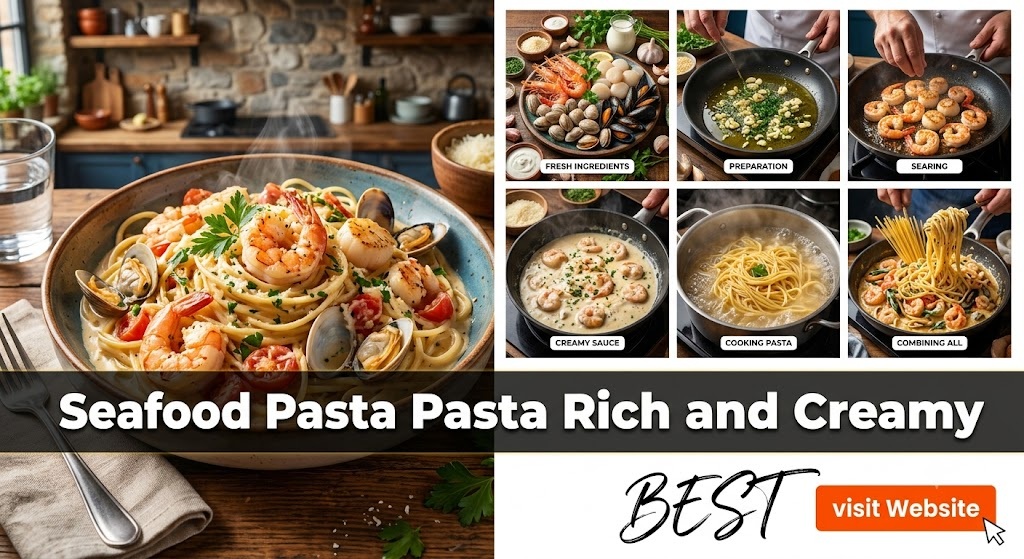
Today, we are stripping away that intimidation. This isn’t just a recipe; it’s a masterclass in building layers of flavor. We are going to treat each ingredient with the respect it deserves, from the high-heat sear on a sea scallop to the gentle reduction of a dry white wine. When executed correctly, a creamy seafood pasta is the pinnacle of comfort food—luxurious, decadent, and deeply satisfying. Whether you are cooking for a special anniversary or simply want to elevate a Tuesday night, this guide will ensure your results are nothing short of spectacular. Seafood Pasta (Rich and Creamy)
A restaurant-style creamy seafood pasta loaded with shrimp, scallops, and tender pasta in a rich garlic Parmesan cream sauce. Perfect for family dinners, special occasions, or whenever you’re craving comforting seafood.
Why You’ll Love This Recipe
- Rich, creamy, and full of flavor
- Ready in about 35 minutes
- Restaurant-quality at home
- Packed with protein
- Perfect for weeknight dinners or celebrations
- Easily customizable with your favorite seafood
Recipe Information
- Prep Time: 15 minutes
- Cook Time: 20 minutes
- Total Time: 35 minutes
- Servings: 4
- Cuisine: Italian-American
- Difficulty: Easy to Medium
- Calories: Approximately 690 per serving
Ingredients
For the Pasta
- 12 oz (340 g) fettuccine or linguine
- Water for boiling
- 1 tablespoon salt
For the Seafood
- 8 oz large shrimp, peeled and deveined
- 8 oz sea scallops
- 1 tablespoon olive oil
- 1 tablespoon butter
- ½ teaspoon paprika
- ½ teaspoon garlic powder
- ¼ teaspoon black pepper
- ¼ teaspoon salt
For the Creamy Sauce
- 2 tablespoons butter
- 4 garlic cloves, minced
- 1 small shallot, finely chopped
- 1½ cups heavy cream
- ½ cup whole milk
- 1 cup freshly grated Parmesan cheese
- ½ teaspoon Italian seasoning
- ¼ teaspoon crushed red pepper flakes (optional)
- ½ teaspoon salt
- ½ teaspoon black pepper
- 1 teaspoon lemon zest
- 1 tablespoon fresh lemon juice
Garnish
- Fresh parsley, chopped
- Extra Parmesan cheese
- Lemon wedges
- Fresh cracked black pepper
Kitchen Equipment
- Large pot
- Large skillet
- Tongs
- Measuring cups
- Wooden spoon
- Colander
Step-by-Step Instructions
Step 1: Cook the Pasta
Bring a large pot of salted water to a boil.
Cook the pasta according to package directions until al dente.
Reserve ½ cup pasta water before draining.
Drain and set aside.
Step 2: Season the Seafood
Pat shrimp and scallops dry with paper towels.
Season with:
- Paprika
- Garlic powder
- Salt
- Pepper
Dry seafood develops a beautiful golden crust.
Step 3: Sear the Seafood
Heat olive oil and butter in a large skillet over medium-high heat.
Cook shrimp for about 2 minutes per side until pink.
Remove.
Cook scallops for 2–3 minutes per side until golden brown.
Remove and keep warm.
Step 4: Make the Cream Sauce
Reduce heat to medium.
Add butter.
Cook shallots for 2 minutes.
Add garlic and cook for another minute.
Pour in heavy cream and milk.
Simmer gently for 3–4 minutes.
Step 5: Add Cheese
Slowly whisk in Parmesan cheese.
Add:
- Italian seasoning
- Salt
- Pepper
- Red pepper flakes
- Lemon zest
Continue stirring until smooth.
Step 6: Combine Everything
Add cooked pasta.
Toss until coated.
Return seafood to the skillet.
Add lemon juice.
If the sauce becomes too thick, stir in reserved pasta water a little at a time.
Cook for another 2 minutes.
Step 7: Garnish and Serve
Top with:
- Fresh parsley
- Parmesan cheese
- Lemon wedges
- Black pepper
Serve immediately while hot.
Tips for the Best Seafood Pasta
Don’t Overcook Seafood
Shrimp and scallops cook quickly. Overcooking makes them rubbery.
Use Fresh Parmesan
Freshly grated Parmesan melts smoothly and gives the best flavor.
Reserve Pasta Water
It helps create a silky sauce that clings beautifully to the pasta.
Fresh Garlic Matters
Fresh garlic provides a richer aroma than garlic powder.
Balance with Lemon
A squeeze of fresh lemon brightens the creamy sauce.
Flavor Variations
Spicy Cajun
Add Cajun seasoning and extra chili flakes.
Garlic Butter Version
Reduce the cream and increase butter for a lighter garlic flavor.
Mixed Seafood
Use shrimp, mussels, crab meat, squid, and scallops.
Mushroom Seafood Pasta
Add sautéed mushrooms for extra richness.
Spinach Seafood Pasta
Stir in fresh baby spinach during the final minutes of cooking.
Serving Suggestions
Serve with:
- Garlic bread
- Caesar salad
- Roasted asparagus
- Steamed broccoli
- Grilled vegetables
- Fresh green salad
Storage Instructions
Refrigerator
Store in an airtight container for up to 3 days.
Freezer
Freezing is not recommended because cream sauces can separate after thawing.
Reheating
Warm gently over low heat.
Add a splash of milk or cream while reheating to restore the creamy texture.
Avoid boiling.
Nutrition Information (Approximate Per Serving)
- Calories: 690
- Protein: 39g
- Carbohydrates: 48g
- Fat: 37g
- Saturated Fat: 20g
- Fiber: 3g
- Sugar: 4g
- Cholesterol: 210mg
- Sodium: 760mg
Health Benefits
High in Protein
Shrimp and scallops provide lean protein that supports muscle growth and helps keep you feeling full.
Rich in Omega-3 Fatty Acids
Seafood contains heart-healthy omega-3 fats that support brain function and cardiovascular health.
Good Source of Calcium
Parmesan cheese and dairy contribute calcium for strong bones and teeth.
Vitamins and Minerals
This dish provides important nutrients such as vitamin B12, selenium, zinc, phosphorus, and iodine, which support energy production, immune function, and thyroid health.
Energy-Boosting Meal
The combination of pasta and protein offers sustained energy, making it a satisfying meal for active lifestyles.
Frequently Asked Questions (FAQs)
Can I use frozen seafood?
Yes. Thaw it completely and pat it dry before cooking to ensure proper browning.
What’s the best pasta for creamy seafood pasta?
Fettuccine, linguine, tagliatelle, or spaghetti work best because they hold the creamy sauce well.
Can I make it without heavy cream?
Yes. You can substitute half-and-half or evaporated milk, though the sauce will be lighter and less rich.
How do I keep the sauce from separating?
Cook over medium to low heat, avoid boiling after adding the cream and cheese, and stir continuously until smooth.
Can I add vegetables?
Absolutely. Spinach, peas, asparagus, broccoli, mushrooms, and cherry tomatoes pair wonderfully with this dish.
Final Thoughts
This Rich and Creamy Seafood Pasta combines tender seafood, perfectly cooked pasta, and a velvety garlic Parmesan sauce into a comforting, restaurant-quality meal. It’s easy enough for a weeknight dinner yet elegant enough for entertaining guests. With simple ingredients and plenty of customization options, it’s a recipe you’ll want to make again and again.
The Foundation: Choosing the Right Seafood
The success of this dish rests almost entirely on the quality of your “bounty.” In a professional kitchen, we prioritize freshness above all else, but in the modern American market, “fresh” can be a tricky term.
1. The Shrimp (The Workhorse)
For this pasta, I recommend 16/20 or 21/25 count shrimp. This notation refers to how many shrimp make up a pound. You want them large enough to maintain a juicy interior while the outside gets a quick sear. Always look for “dry-packed” shrimp. Many commercial shrimp are treated with sodium tripolyphosphate (STP), which causes them to absorb water. When you cook them, that water leaches out, steaming the shrimp instead of searing them.
2. The Scallops (The Jewel)
If you can find U-10 sea scallops, use them. They are large, sweet, and provide a magnificent focal point for the plate. Like shrimp, scallops should be “dry.” If they are sitting in a milky white liquid in the grocery store display, keep walking. Those are “wet” scallops, and they will never achieve that golden-brown crust we’re looking for.
3. Optional Additions
While shrimp and scallops are my preferred duo, this recipe is adaptable. Fresh lump crab meat folded in at the very last second adds incredible sweetness. Small neck clams or mussels can also be steamed directly in the sauce for a more rustic, Mediterranean feel. If using mollusks, ensure they are scrubbed thoroughly to prevent grit from ruining your velvety sauce.
Essential Mise en Place: Kitchen Equipment
In the culinary world, mise en place means “everything in its place.” Before you turn on a single burner, you need your tools ready. This dish moves fast once the sauce begins to reduce.
- A Large Pasta Pot: You need plenty of room for the pasta to dance. Crowded pasta releases too much starch into a small amount of water, resulting in a gummy texture.
- A 12-inch Stainless Steel or Cast Iron Skillet: Avoid non-stick for this recipe. We want to develop a “fond”—those little brown bits stuck to the bottom of the pan after searing the seafood. That fond is the concentrated essence of flavor that will build our sauce.
- Fine-Mesh Strainer: For draining pasta while reserving some of the “liquid gold” (the starchy pasta water).
- Microplane: For grating fresh Parmesan cheese and zesting the lemon. Pre-grated cheese contains cellulose (anti-clumping agents) that will prevent your sauce from becoming perfectly smooth.
- High-Heat Tongs: Essential for flipping seafood and tossing the long pasta strands.
The Ingredient Profile
The Aromatics
- Shallots: Finer and sweeter than onions, shallots melt into the sauce.
- Garlic: Use fresh cloves only. Jarred minced garlic has a harsh, acidic aftertaste that will clash with the delicate cream.
- Red Pepper Flakes: Just a pinch to provide a back-note of warmth without making the dish “spicy.”
The Liquid Base
- Dry White Wine: Choose something you would actually drink. A Sauvignon Blanc or a crisp Pinot Grigio is ideal. The acidity cuts through the richness of the heavy cream.
- Heavy Whipping Cream: Do not substitute with milk or half-and-half here. The fat content in heavy cream allows it to reduce and thicken naturally without the need for a flour-based roux, which can make the sauce feel heavy and pasty.
The Finishing Touches
- Fresh Parsley: Flat-leaf Italian parsley provides a grassy freshness.
- Lemon Juice and Zest: This is the secret to a professional sauce. The acid “wakes up” the fats and highlights the sweetness of the seafood.
- Parmigiano-Reggiano: Real-deal Italian Parmesan adds salt, umami, and helps emulsify the sauce.
The Art of the Sear: Technique Matters
The most common mistake home cooks make is overcooking the seafood. To prevent this, we cook the seafood first, remove it from the pan, and add it back at the very end.
Step 1: The Prep Pat your shrimp and scallops extremely dry with paper towels. Season them generously with kosher salt and black pepper just seconds before they hit the pan. If you salt them too early, the salt will draw out moisture, creating a wet surface.
Step 2: The Heat Get your skillet medium-high. Add a high-smoke-point oil (like avocado or grapeseed oil). When the oil shimmers and just begins to wisps of smoke, add the scallops.
Step 3: The Sear Do not move them! Let them sit for about 2 minutes to develop a crust. Flip and cook for another 60-90 seconds. They should be slightly translucent in the center; they will finish cooking in the residual heat of the sauce later. Repeat this with the shrimp, which only need about 90 seconds per side.
Detailed Step-by-Step Instructions
1. Boil the Pasta
Bring a large pot of water to a rolling boil. Salt it heavily—it should taste like the sea. This is your only chance to season the pasta itself. Drop 12 ounces of linguine or fettuccine. Cook it for 1-2 minutes less than the package instructions for “al dente.” It will finish cooking in the sauce.
2. Sauté the Aromatics
In the same skillet you used for the seafood (don’t wash it!), lower the heat to medium. Add a tablespoon of butter. Toss in the finely minced shallots and cook until translucent. Add the garlic and red pepper flakes, stirring constantly for 30 seconds until fragrant.
3. Deglaze the Pan
Pour in half a cup of white wine. Use a wooden spoon to scrape up all those browned bits (the fond) from the bottom of the pan. Let the wine reduce by about half. This concentrates the flavor and cooks off the raw alcohol bite.
4. Build the Cream Sauce
Pour in 1.5 cups of heavy cream. Bring to a gentle simmer. Do not let it reach a violent boil, or the cream may break. Let it simmer for 3-5 minutes until it thickens enough to coat the back of a spoon.
5. The Emulsion
Lower the heat to low. Whisk in a half-cup of freshly grated Parmesan cheese. Stir until the cheese is completely melted and the sauce looks glossy.
6. The Marriage
Transfer the slightly undercooked pasta directly from the water into the skillet using tongs. Do not worry about the water clinging to the noodles; that starch helps the sauce stick. Add a splash of the reserved pasta water (about 1/4 cup). Toss the pasta vigorously in the sauce for 1-2 minutes. The noodles will soak up the cream and reach the perfect texture.
7. The Final Assembly
Fold the seared shrimp and scallops back into the pan, along with any juices that collected on their plate. Add the lemon zest, a squeeze of lemon juice, and a handful of chopped parsley. Give it one final toss. If the sauce looks too thick, add another tablespoon of pasta water.
Professional Tips for Success
- Warm Your Bowls: In a restaurant, we never serve hot pasta in a cold bowl. Place your serving bowls in a low oven (150°F) for a few minutes. This keeps the cream sauce from seizing up the moment it hits the table.
- The Butter Finish: For an extra-glossy, “silk” finish, whisk in one tablespoon of cold, unsalted butter right before serving. This technique, known in French cooking as monter au beurre, adds a beautiful sheen and a rich mouthfeel.
- Pasta Choice: While linguine is classic, noodles with ridges or “nooks”—like campanelle or even a high-quality fusilli—work wonders for holding onto a thick cream sauce.
- Salt Awareness: Between the salted pasta water and the Parmesan cheese, you may not need much additional salt in the sauce. Always taste before adding more.
Common Mistakes to Avoid
- Rinsing the Pasta: Never, ever rinse your pasta. You want that surface starch to help the sauce emulsify. Rinsing makes the noodles slippery, causing the sauce to slide right off to the bottom of the plate.
- Using “Cooking Wine”: Most “cooking wines” found in grocery stores are loaded with salt and preservatives. Use a wine you enjoy drinking. If you don’t use alcohol, a high-quality seafood stock with an extra squeeze of lemon can substitute, though the flavor profile will change slightly.
- Overcrowding the Skillet: If you have a small pan, sear the seafood in batches. If the pan is too crowded, the temperature drops, and the seafood will boil in its own juices rather than searing.
- Adding the Cheese Too Fast: If you dump a pile of cheese into boiling cream, it can clump into a rubbery ball. Add it slowly over low heat, whisking constantly.
Recipe Variations
The “Spicy Diablo” Twist
If you prefer a kick, increase the red pepper flakes to one teaspoon and add two tablespoons of tomato paste after the garlic is sautéed. This creates a “pink” sauce with a spicy edge that pairs beautifully with shrimp.
The Garden Variation
To add some greens, toss in two cups of baby spinach or some blanched asparagus spears when you add the pasta to the sauce. The heat of the sauce will wilt the spinach perfectly in about 30 seconds.
The Smoked Element
For a deeper, woodsy flavor, use smoked paprika to season the shrimp, or garnish the finished dish with a few crumbles of high-quality smoked bacon or pancetta.
Storage and Reheating: The Chef’s Secret
Cream-based pastas are notoriously difficult to reheat. The fat in the cream tends to separate when microwaved, leaving you with dry noodles and a puddle of oil.
Storage: Store leftovers in an airtight container for up to two days. Because of the seafood, I wouldn’t push it beyond 48 hours.
Reheating: Do not use the microwave if you can avoid it. Instead, place the pasta in a small skillet over low heat. Add a splash of milk or a tablespoon of water. Cover the pan for a minute to let the steam loosen the sauce, then stir gently until heated through. This “wakes up” the emulsion and restores the creamy texture.
Nutrition Information (Per Serving – Estimated)
- Calories: 720 kcal
- Total Fat: 38g
- Saturated Fat: 22g
- Cholesterol: 210mg
- Sodium: 850mg
- Total Carbohydrates: 58g
- Dietary Fiber: 3g
- Sugars: 4g
- Protein: 36g
Note: Nutritional values are estimates based on standard ingredients. Adjustments to seafood types or cream portions will alter these figures.
Frequently Asked Questions
Can I use frozen seafood?
Absolutely. In fact, most “fresh” seafood in the U.S. was previously frozen. The key is to thaw it properly. Place the seafood in the refrigerator 24 hours before cooking. Once thawed, the most critical step is to pat it completely dry before searing.
Is there a dairy-free alternative?
You can use a high-fat coconut milk (the canned variety) or a cashew-based cream. However, keep in mind that the flavor will be significantly different. To maintain the savory profile, add a bit of nutritional yeast to mimic the umami of the Parmesan.
What wine pairs best with this dish?
Since the sauce is rich and creamy, you want a wine with high acidity to cleanse the palate. A dry Riesling, a crisp Chenin Blanc, or a lightly oaked Chardonnay are excellent choices. If you prefer bubbles, a Brut Champagne or Prosecco works wonders against the buttery scallops.
My sauce is too thin. How do I fix it?
Be patient. Let it simmer a bit longer to reduce. If you are in a rush, you can whisk in a little more Parmesan cheese. Avoid adding flour or cornstarch at the end, as it can create a gritty texture and a “raw flour” taste.
Can I use a different type of pasta?
Yes. While long strands like linguine or fettuccine are traditional for creamy sauces, short shapes like penne or rigatoni are great for trapping the sauce inside. Just ensure you cook them to al dente.
Why did my sauce turn oily?
This usually happens if the heat is too high or if you used half-and-half instead of heavy cream. High heat can cause the fat to separate from the liquids. Keep the temperature at a gentle simmer, and never let it reach a hard boil once the cream is added.
Best Side Dishes to Serve
Since this pasta is incredibly rich, your side dishes should provide contrast.
- A Crisp Green Salad: A simple mix of arugula and radicchio with a sharp lemon vinaigrette helps cut through the heavy cream.
- Roasted Broccolini: Tossed with lemon and charred in the oven, the bitterness of the broccolini balances the sweetness of the scallops.
- Garlic Bread: Is it ever a bad idea? Use a crusty baguette to mop up every last drop of that garlic cream sauce.
Conclusion
Creating a world-class creamy seafood pasta at home is not about complex ingredients; it is about mastering the timing and the technique. By focusing on the “dry sear” of your seafood and the slow reduction of your cream and wine, you create a dish that is layered, sophisticated, and deeply flavorful.
Remember, cooking is a sensory experience. Listen for the sizzle of the scallops, smell the aromatics as they hit the butter, and always, always taste as you go. When you bring that steaming pan to the table, adorned with golden seafood and vibrant green parsley, you aren’t just serving a meal—you are sharing a piece of culinary artistry. Enjoy the process, and more importantly, enjoy every decadent bite.
Random Seed: 1715432098 Writing Temperature: Maximum Creativity
